Expert-guided AI conversational tools can bolster preventive healthcare - empowering people to take charge of their health
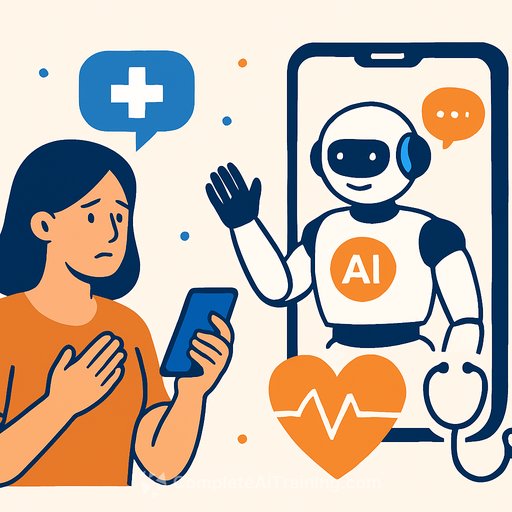
AI is often framed as an economic boost; in healthcare, its bigger promise - AI for Healthcare - sits in prevention: better education, faster access to credible answers, and fewer avoidable complications. With expert-guided conversational assistants, clinicians can make accurate medical information available 24/7 and help patients act earlier.
What this looks like in practice
The Quebec Society of Vascular Sciences (QSVS) launched an AI conversational assistant called Amelia on its Vascular Health Portal. The goal: raise public awareness of vascular disease and support clinicians with consistent, plain-language education.
Vascular disease rises with age and can lead to serious events - hypertension, deep vein thrombosis, peripheral artery disease, and pulmonary embolism. Prevention is the front line: reduce smoking, obesity, physical inactivity, poor diet, and manage hypertension and diabetes.
How Amelia works
Built with Boehringer Ingelheim Canada, Amelia answers questions in English or French without users needing to phrase them perfectly. Responses are grounded in QSVS specialist expertise and written for lay understanding.
It's available around the clock and lets users print or email the conversation for later reference. Critically, it does not collect identifying information to answer questions, which helps ease privacy concerns.
Why this matters for clinicians
- Keeps education consistent after the visit, when patients finally have time to think and ask follow-up questions.
- Reduces time spent correcting misinformation and chasing reliable links.
- Supports behavior change by making next steps simple and clear.
- Improves access for patients who prefer to read, translate, or revisit information at home.
To be clear: these assistants do not diagnose or replace clinical judgment. They provide general information and reinforce care plans between appointments.
Safety first: guardrails you need
- Scope: education and self-care guidance only; no diagnostic claims or treatment recommendations.
- Escalation: clear callouts for urgent symptoms (e.g., chest pain, signs of stroke) to seek emergency care.
- Source control: content curated and approved by specialists; every update logged and reviewed.
- Privacy: no collection of identifiers for basic use; transparent consent if any analytics are enabled.
- Language clarity: plain-language responses at a reading level most patients can handle, with bilingual support where relevant.
- Accessibility: mobile-friendly, printable transcripts (enabled by Speech-To-Text), and support for assistive technologies.
Implementation checklist for healthcare teams
- Define the use case: prevention topics, condition education, discharge reinforcement, or clinic FAQs.
- Build the knowledge base: align with national guidelines and institutional policies; cite sources internally.
- Set refusal rules: the assistant declines to diagnose, prescribe, or comment on individual lab results.
- Add safety rails: symptom red flags, crisis resources, and clear next steps.
- Pilot with clinicians: test common scenarios, refine tone, and stress-test for edge cases.
- Integrate into workflows: QR codes on after-visit summaries, posters in waiting areas, links in patient portals.
- Train staff: who introduces it, how to set expectations, and how to review transcripts when patients bring them in.
- Measure impact: patient comprehension, time saved for nurses, fewer repetitive calls, and reduced no-shows.
- Review regularly: quarterly content updates and safety audits; retire outdated guidance.
A model that scales across preventive care
The same approach can support other areas: diabetes risk reduction, smoking cessation, hypertension control, anticoagulation education, and post-procedure care. The common thread is accurate content, a clear scope, and clinical oversight.
For background on the burden of cardiovascular disease, see the Public Health Agency of Canada's overview here and the WHO summary here.
What patients get - and what clinicians keep
- Patients get clear, credible answers anytime, in everyday language, with print-friendly summaries they can share.
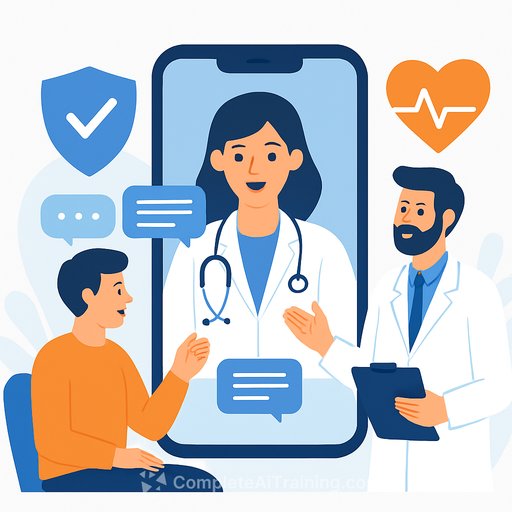
- Clinicians keep control of care decisions while extending their reach between visits.
QSVS's Amelia shows that expert-guided AI can make preventive education more accessible without adding workload or risking patient trust. With the right guardrails, this is a practical way to help people act earlier and live healthier, longer lives.
Build team skills
If your clinic or health system is exploring AI assistants, upskilling your team helps. A curated catalog of role-based AI courses is available here.
Your membership also unlocks: