Tsinghua University Releases First University-Wide AI Framework for Teaching and Research
Tsinghua University has released the "Guiding Principles for the Application of Artificial Intelligence in Education," a comprehensive framework that sets clear standards for how AI should be used across courses, labs, and graduate research. The aim is simple: enable meaningful use of AI while protecting academic integrity, data, and student growth.
Built with input from academic and administrative teams, the framework balances openness to new tools with firm boundaries on disclosure, ethics, and originality. As Wang Shuaiguo, Director of the Online Education Center and primary drafter, put it, the document is meant to be a living system-supporting innovation as the technology evolves.
What the framework covers
The guidelines are organized into three sections with scenario-based direction educators can apply directly:
- General Provisions
- Teaching and Learning
- Theses, Dissertations, and Practical Achievements
Together, they set expectations for responsible use, instructor accountability, student conduct, and graduate research standards.
The five core principles
- Responsibility
- Compliance and integrity
- Data security
- Prudence and critical thinking
- Fairness and inclusiveness
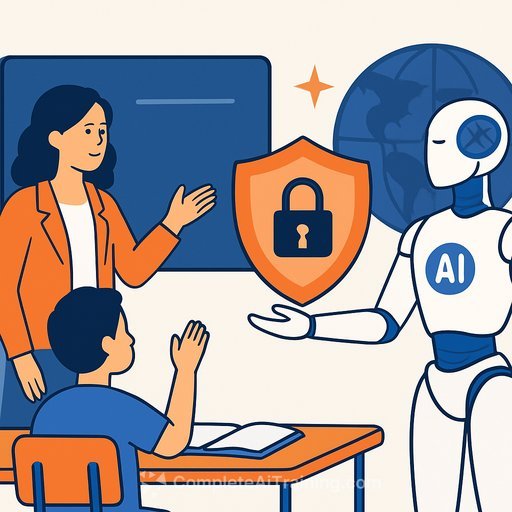
AI is positioned as an auxiliary tool-teachers and students remain the main drivers of learning. The framework requires proper disclosure of AI use, prohibits academic misconduct, and bans using sensitive or unauthorized data in training or operating models. It also calls for multi-source verification to catch AI-generated errors and emphasizes reducing algorithmic bias and the digital divide so AI serves the public good.
Teaching and learning: expectations for the classroom
- Instructors define permitted AI uses based on course goals and explain the policy at the start of the semester.
- Faculty are responsible for any AI-generated teaching materials they adopt or adapt.
- Students may use AI as a learning aid within course boundaries.
- Copying or mechanically paraphrasing AI-generated text, code, or other content for submissions is strictly prohibited.
- Courses should help students build a critical, well-rounded view of AI-its strengths, limits, and risks.
Graduate work: integrity and originality
- AI cannot replace the academic training or independent intellectual work expected of graduate students.
- Ghostwriting, plagiarism, fabrication, and related misconduct are banned.
- Supervisors provide explicit guidance on acceptable AI use and maintain oversight throughout the research process.
- Originality and academic integrity remain the baseline for theses, dissertations, and practical achievements.
Institutional rollout and what's next
The university designed the principles with room to grow-covering current teaching and research scenarios while supporting future use in academic research, administrative services, and new campus applications. The work began in summer 2024 and shifts the focus from tool adoption to the institutional structures that make responsible use possible.
Tsinghua will promote the principles through its AI literacy platform, faculty workshops, and interdisciplinary dialogue. The release also reflects the university's ongoing system work, including its three-layer decoupled approach to AI in education.
Practical steps educators can apply now
- Add a clear AI-use statement to every syllabus: permitted tools, boundaries, disclosure rules, and consequences.
- Require AI-use disclosure on assignments and capstone work (what was used, for what purpose, and how outputs were verified).
- Design assignments that assess reasoning and process (drafts, version history, oral defenses, live problem-solving).
- Teach verification habits: cross-check with multiple sources and cite them. Make "trust but verify" a class norm.
- Set data rules: no sensitive, confidential, or restricted data in prompts or uploads without written approval.
- Address bias and access: discuss limitations, offer non-AI pathways, and support students with limited tool access.
- For graduate advising: define acceptable use at project kickoff, require periodic check-ins, and document decisions.
Learn more
Read the full principles and follow updates from Tsinghua University here: Tsinghua University (official).
If you're building faculty or staff AI literacy, explore role-based course options here: Complete AI Training - Courses by Job.
Your membership also unlocks: