Tsinghua unveils a university-wide AI framework for teaching and research
Beijing, Dec. 1, 2025 - Tsinghua University released its first comprehensive, campus-wide framework for the use of AI in education and research. It's a clear signal to higher education: move past ad hoc experiments and set shared standards.
Generative AI is now part of lectures, labs, and student workflows. Tsinghua's new Guiding Principles offer structure without stifling progress, aiming to reduce overreliance, protect integrity, and keep learning at the center.
What's inside the framework
The document is organized into three sections: General Provisions, Teaching and Learning, and Theses, Dissertations and Practical Achievements. It pairs top-level principles with scenario-based guidance educators can apply right away.
Core principles (General Provisions)
- Responsibility: AI remains an auxiliary tool; teachers and students drive learning and research.
- Compliance and integrity: Disclose AI use and prohibit academic misconduct.
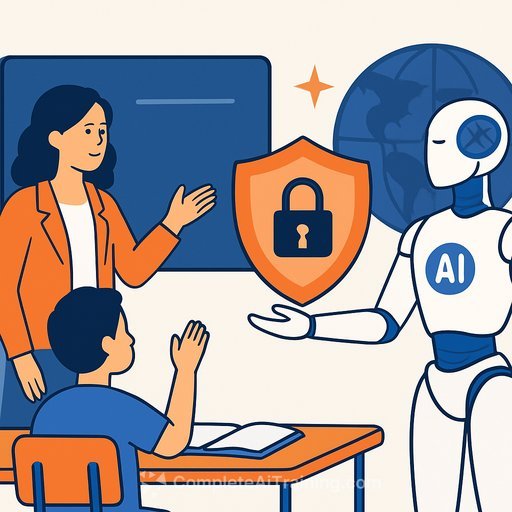
- Data security: Do not use sensitive or unauthorized data to train or run AI systems.
- Prudence and critical thinking: Verify AI outputs from multiple sources to avoid cognitive complacency.
- Fairness and inclusiveness: Address algorithmic bias and the digital divide to ensure public benefit.
The framework calls for transparency when AI assists in coursework or research, bans ghostwriting and fabrication, and urges careful review of model outputs. It also underscores equity: AI adoption should support access, not widen gaps.
Guidance for teaching and learning
- Instructors define acceptable AI use based on course objectives and explain the policy at the start of the term.
- Faculty take responsibility for any AI-assisted teaching materials they provide.
- Students may use AI as a learning aid within course boundaries, but copying or mechanically paraphrasing AI-generated text, code, or media for submission is prohibited.
- Courses should help students build critical, well-rounded perspectives on AI's value and limitations.
Standards for theses, dissertations, and practical work
- AI cannot replace academic training or independent intellectual work.
- Ghostwriting, plagiarism, fabrication, and related misconduct are strictly forbidden.
- Supervisors provide clear guidance on permissible AI use and maintain oversight throughout the research process.
Built to grow with the technology
According to the drafting team, the policy leaves room for future expansion across academic research and administrative services. The intent is a living system that evolves as AI tools mature-covering emerging uses such as AI-powered courses, knowledge engines, agent instructors, and campus companions.
Why this matters for educators
Tsinghua's release marks a shift from tool-first experimentation to institution-level support. It helps departments align expectations, protect academic integrity, and create consistent student experiences across programs.
The effort stems from work that began in summer 2024 and reflects cross-campus collaboration. Promotion will run through an AI literacy platform, faculty workshops, and interdisciplinary dialogue to keep practice aligned with policy.
Practical steps you can implement this semester
- Add a syllabus policy: Define permitted AI uses, disclosure requirements, and consequences.
- Use a disclosure note: Require students and TAs to state how AI was used in assignments and materials.
- Adopt a verification routine: Encourage multi-source checks for facts, citations, and code.
- Set data rules: Ban uploading sensitive or proprietary data to external tools; document safe alternatives.
- Audit for bias and access: Provide non-AI pathways and review prompts/datasets for fairness.
- Guide graduate work: Clarify what assistance is allowed, keep logs of AI use, and review drafts for originality.
- Update assessment design: Mix process-based grading, oral defenses, and applied tasks to reduce low-effort AI copying.
Learn more and take action
Read the announcement and follow updates from Tsinghua University. Use it as a model to pressure-test your own policies and close gaps across departments.
If you're building staff capability or course-ready skills, explore educator-focused programs at Complete AI Training for practical options you can roll out with faculty and TAs.
Your membership also unlocks: