Future of women's health: How two sisters are using AI-powered care for India's underserved women
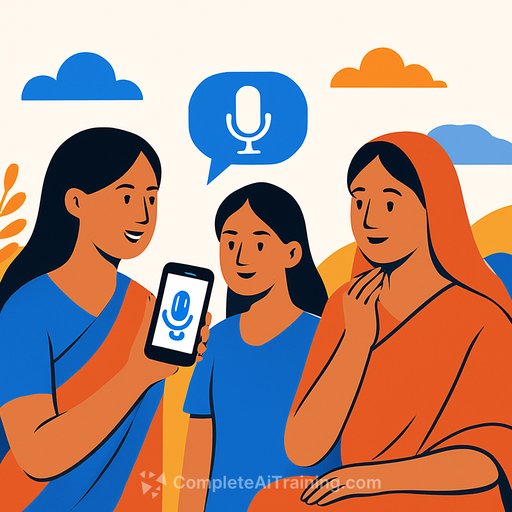
Aaroogya AI Foundation, led by sisters Dr. Priyanjali Datta and Shyanjali Datta, is building a voice-first care network for women who are often last in line for healthcare. Their platform, MyHealthline, delivers medical guidance in local languages and works even without internet access.
The goal is simple: close the gap created by low literacy, poor connectivity, social stigma, and clinician shortages in rural India. The method is practical: meet women where they are, in their language, through their voice.
The problem healthcare teams see on the ground
Delayed care is common in rural settings. Missed follow-ups, unclear triage pathways, and limited screening capacity turn manageable issues into life-altering conditions.
Women report symptoms verbally, but most tools still expect forms, typing, and stable networks. That mismatch blocks access before a clinician ever gets involved.
How MyHealthline works
The platform uses natural language processing and machine learning to interpret symptoms shared conversationally. It flags risk for PCOS, anemia, breast cancer, diabetes, and other conditions, then guides users to the next best step.
Crucially, it runs offline and supports voice guidance for low-literacy users. That makes triage and education possible in clinics, homes, and community settings with patchy network coverage.
"Our goal is simple - no woman should ever feel unheard or unseen when it comes to her health," says Dr. Priyanjali Datta, Founder 1.0, Aaroogya AI Foundation.
"Growing up in Shillong, I faced limited access to proper medical intervention," recalls Shyanjali Datta, Founder 2.0. "The system felt fragmented. There was no reliable guidance, no way to know where to turn."
From reactive to proactive: agentic AI for early signals
Aaroogya's agentic AI system monitors and analyzes health inputs in real time, learning from new data to refine assessments. It highlights early warning signs for conditions like breast cancer and anemia to prompt timely care.
This anticipatory approach supports earlier referrals, better triage, and more efficient use of limited specialist capacity.
Built for frontline workers
ASHA workers and community clinicians can use the voice agent to capture symptoms quickly, without heavy typing. The tool streamlines screening checklists, referral suggestions, and follow-up reminders.
Because it works offline, outreach doesn't stop when the signal drops. Documentation syncs when connectivity returns.
Model choices and offline accuracy
According to Dr. Priyanjali, newer model families enable better multi-condition screening. Google's Gemini supports reasoning over diverse inputs, while compact models such as 7B-class LLMs help deliver capability in low-resource environments.
MyHealthline's emphasis on local language, voice UX, and offline operation makes it useful where conventional apps fail. The result is access without compromising context or dignity.
Ethics, validation, and partners
The foundation's work is supported by organizations including HDFC, FICCI, USAID, The Nudge Foundation, Cisco, and IIT Delhi. This backing is used to ensure governance, safety testing, and external validation.
Safeguards include clear handoffs to clinicians, transparent risk communication, and data practices aligned with community consent. The system assists; it does not replace medical judgment.
Scale and ambition
Aaroogya has run projects beyond India, including in East Africa. The team's target: train one lakh healthcare workers and reach five million women by 2030.
The focus is scale with quality - consistent protocols, measurable outcomes, and local adaptation.
What healthcare leaders can do now
- Pilot voice-first intake for women's health in low-connectivity clinics and community programs.
- Equip ASHA workers with offline screening tools and simple referral pathways.
- Prioritize early detection for PCOS, anemia, breast cancer, and diabetes with standardized prompts.
- Establish clinical oversight loops: periodic case reviews, escalation criteria, and quality audits.
- Invest in language coverage, privacy-by-design, and model performance tracking in real settings.
- Fund training so teams understand where AI helps, where it fails, and how to act on its outputs.
"Today, with advanced models like Google's Gemini and Meta's Llama 7B, we can deliver multi-condition screenings with greater accuracy. Unlike most AI tools, MyHealthline is built to work offline and supports voice for low-literacy users. For ASHA workers who can't type much or face language barriers, our voice agent simplifies the workload," says Dr. Priyanjali.
Why this matters
Access should not be a function of bandwidth or literacy. Technology should listen first, then guide - especially for patients who rarely get a platform.
Aaroogya's approach is a reminder: progress in healthcare is measured by outcomes at the edges of the system, not just at its center.
If your organization is building AI fluency for clinical teams and care operations, explore practical training resources by job role: Complete AI Training.
For millions of women across India, the right to healthcare shouldn't depend on location - but on being heard.
Your membership also unlocks: