
AI news ·
UAE launches AI-generated spokesperson for government communications
The UAE Presidential Court's International Affairs Office deployed an AI-generated spokesperson named Zayed to deliver policy messaging directly to the public. The move comes as the government targets shifting 50% of public-sector operations to agentic AI models within two years.
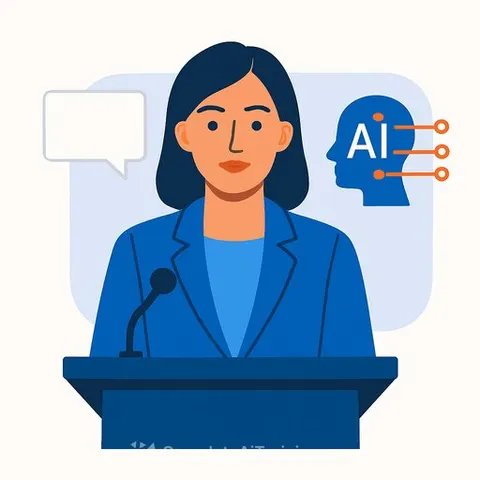
The UAE Presidential Court's International Affairs Office launched an AI-generated spokesperson named Zayed, a virtual representative that will communicate policy positions and initiatives to domestic and international audiences. The move pushes AI beyond backend government operations into a visible, outward-facing communications role - a shift that PR and communications professionals in both public and private sectors will need to watch closely.
Developed specifically for the International Affairs Office, Zayed acts as a digital representative delivering consistent messaging on priorities and initiatives. Mariam bint Mohammed Almheiri, Head of the International Affairs Office, described the project as part of a long-term effort to strengthen how institutions connect with the communities they serve. She said AI is "not merely as a technological advancement but as a tool capable of enhancing engagement between institutions and the communities they serve."
Moving AI from the back office to the front lines
The launch reflects a pattern emerging across government communications: AI is shifting from a productivity tool that drafts press releases or summarizes reports into a channel that directly shapes public interaction. By creating a virtual spokesperson, the UAE is testing whether generative AI can scale communications work while keeping institutional messaging coherent across different languages, platforms, and audience segments.
This comes as the UAE accelerates its national AI agenda. Earlier this year, the government set a target to transform 50% of public-sector services and operations using agentic AI models within two years. The Zayed project shows how communications teams are now part of that transformation, not merely support functions watching from the sidelines.
What this means for institutional trust
The introduction of virtual government representatives raises questions that communications strategists will need to address. How do audiences verify information delivered by an AI spokesperson? What happens to institutional trust when the messenger is synthetic? These are not theoretical concerns - they will become operational questions as more governments and large organizations test similar tools.
Almheiri framed the effort around societal connection rather than efficiency gains alone. Still, the broader message is clear: institutions are preparing for a world where digital-first populations increasingly encounter public information through AI intermediaries, whether they realize it or not.
Why this matters for PR and communications professionals
Government adoption of technology often signals where corporate and institutional communications will head next. The Zayed project demonstrates that AI spokespersons are no longer experimental marketing gimmicks - they are entering official government communications infrastructure. PR professionals should start asking practical questions now: What governance policies will your organization need before deploying an AI representative? How will you disclose the use of synthetic spokespeople to audiences and regulators? And what happens to your crisis communications plan when an AI spokesperson's statement becomes the story?
Communications teams that build AI literacy now will be better positioned when their own leadership asks whether the organization should have a virtual representative. For those looking to understand how AI intersects with public relations and corporate messaging, resources like AI for PR & Communications courses can provide practical grounding. Similarly, the UAE's approach to integrating AI across public administration - explored in depth in materials on AI for Government - offers a case study that communications strategists in regulated industries should study carefully.