
AI news ·
UAE targets 50% AI integration in government services by 2028, expands AI use in defense
The UAE will shift 50% of government services to autonomous AI systems by 2028, starting with a Ministry of Defense rollout. Federal workers face training and role changes as agencies redesign workflows around AI.
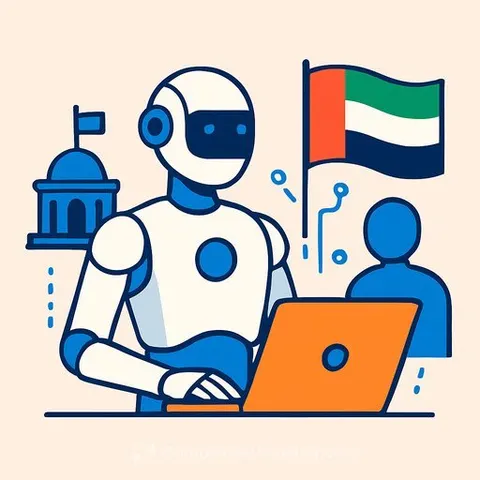
UAE Sets 50% Government AI Target by 2028, Starting With Defense
The United Arab Emirates will move half of its government services to autonomous AI systems within two years, Vice President and Prime Minister Sheikh Mohammed bin Rashid Al Maktoum announced on April 23. The directive comes from President Sheikh Mohamed bin Zayed Al Nahyan and marks a significant acceleration of the country's digital transformation strategy.
Sheikh Mohammed said the shift will redesign how government operates. "AI is no longer a tool. It analyses, decides, executes, and improves in real time," he said. "It will become our executive partner to enhance services, accelerate decisions, and raise efficiency."
The UAE Ministry of Defense is launching the first phase of this effort, rolling out AI projects to modernize operational systems. The defense initiative will focus on planning, data analysis, and advanced systems development to improve resource management and response times to technological challenges.
Implementation and Oversight
Vice President and Deputy Prime Minister Sheikh Mansour bin Zayed Al Nahyan will oversee implementation, with Mohammad Al Gergawi, Minister of UAE Cabinet Affairs, chairing a dedicated task force. Federal employees will receive training to work with AI systems.
The rollout will happen in phases across ministries and federal entities. Performance will be measured by speed of adoption, quality of implementation, and how well agencies redesign work around AI capabilities.
What This Means for Government Workers
The shift to AI Agents & Automation will reduce operational costs and increase productivity by automating routine tasks and enabling faster service delivery. The government expects smart systems to handle work proactively and accurately, freeing staff to focus on higher-level functions.
The UAE has been building toward this for two decades. The country appointed the world's first Minister of State for Artificial Intelligence in 2017 and established a dedicated Ministry of Artificial Intelligence, Digital Economy, and Remote Work Applications in 2020.
For government professionals, the two-year timeline means training and role changes are coming. Understanding AI for Government implementation will be essential as agencies redesign workflows around autonomous systems.
The defense sector initiative will serve as a test case for broader government adoption, with lessons feeding into the wider rollout across federal entities.