UAE Launches $1bn "AI for Development" Fund for Africa: What Finance Teams Should Know
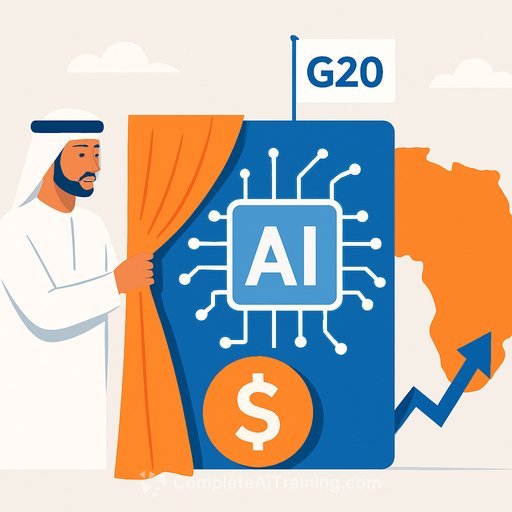
The United Arab Emirates has announced a $1 billion "AI for Development" initiative to finance artificial intelligence projects across African countries. The program was unveiled at the G20 summit and targets education, agriculture, government services, and infrastructure.
The initiative will be implemented by the Abu Dhabi Exports Office (ADEX), part of the Abu Dhabi Fund for Development (ADFD), in coordination with the UAE Foreign Aid Agency. It blends concessional financing with technology deployment and partnerships across public and private actors in African markets.
This move extends the UAE's development finance footprint in Africa, where it has provided more than AED 152 billion in assistance since 1971. It also connects the country's AI ambitions with export promotion and economic diplomacy.
How the Financing Will Likely Work
- Implementers: ADEX (under ADFD) with support from the UAE Foreign Aid Agency. Expect standard ADEX structures and processes to apply.
- Instruments: Concessional loans and export credit facilities are the likely core, with scope for blended finance and co-financing with DFIs and multilateral banks.
- Beneficiaries: Sovereigns, sub-sovereigns, SOEs, and PPPs in African countries. Private operators may access capital through partnerships with public sponsors.
- Vendor/Content: Expect preference for UAE-linked suppliers and tech stacks, with room for local partnerships and capacity-building components.
- Use-of-proceeds: AI systems, platforms, data infrastructure, last-mile enablement, training, and ongoing O&M.
UAE officials highlighted productivity and service delivery as the core outcomes. Financing is expected to back UAE-led consortia as well as joint projects with local institutions.
Where the Money Is Headed
- Education: Digital learning platforms, adaptive assessment, teacher enablement, and student data systems.
- Agriculture: Yield optimization, soil and weather analytics, supply-chain traceability, and input distribution.
- Government Services: Service portals, eID and verification, case management, and automated citizen support.
- Infrastructure: Smart grid analytics, transport and traffic systems, water management, and public safety use cases.
Implications for Lenders, DFIs, and Corporates
- Co-financing: Space for banks and DFIs to participate alongside ADEX, especially in larger sovereign and SOE programs.
- Pipeline building: Strong fit for programmatic, multi-year rollouts-bundle software, data layers, devices, and managed services.
- Risk-sharing: Blended structures can ease cost of capital and extend tenor for projects with social outcomes and measurable KPIs.
- Local capacity: Budgets will likely include training, data governance, and ops support-vital for durability and service uptime.
How to Position Your Deal
- Anchor the business case: Clear ROI tied to cost savings, service uptime, or measurable productivity. Define KPIs up front.
- Secure sponsorship: Line up sovereign or sub-sovereign support and a capable local delivery partner early.
- Structure with export content: Package UAE supplier participation to fit ADEX requirements; include local integration plans.
- Plan for data and infra: Address data residency, cybersecurity, and integration with national ID and payment rails.
- Lock in O&M: Multi-year managed services, training, and handover are critical to avoid performance slippage.
Key Risks and Practical Mitigants
- FX and repayment: Use local-currency revenues where possible; consider hedging or partial guarantees for hard-currency exposure.
- Policy continuity: Build cross-ministry governance and milestone-based disbursements tied to deliverables.
- Data access and quality: Budget for data cleaning, API layers, and privacy controls to keep models useful and compliant.
- Procurement friction: Pre-align technical specs and evaluation criteria with sponsors to avoid re-tenders and delays.
- AI safety and bias: Include transparent model reporting, human oversight, and grievance mechanisms in the SOW.
Who's Involved
Mohamed Saif Al Suwaidi, director-general of ADFD and chair of the Exports Executive Committee of ADEX, said the initiative targets long-term economic resilience through technology-led projects in key sectors. Tareq Ahmed Al Ameri, chair of the UAE Foreign Aid Agency, noted it fits the country's wider development assistance approach in areas with infrastructure and capacity gaps.
Next Steps for Finance Teams
- Engage early with ADEX/ADFD on eligibility, content rules, and documentary requirements.
- Prepare a concise concept note: problem statement, solution architecture, capex/opex breakdown, KPIs, and implementation plan.
- Line up co-financiers and guarantees to improve pricing and tenor, especially for scale programs.
- Develop a country-by-country playbook: regulatory environment, data localization, and integration with national platforms.
For official updates and program mechanics, refer to ADFD/ADEX communications and G20 briefings:
Helpful Resource
If you're evaluating practical AI use cases and vendors for finance operations, this curated list may help with early diligence: Top AI tools for finance teams.
Your membership also unlocks: