AI Becomes a Creative Partner in Architecture and Design
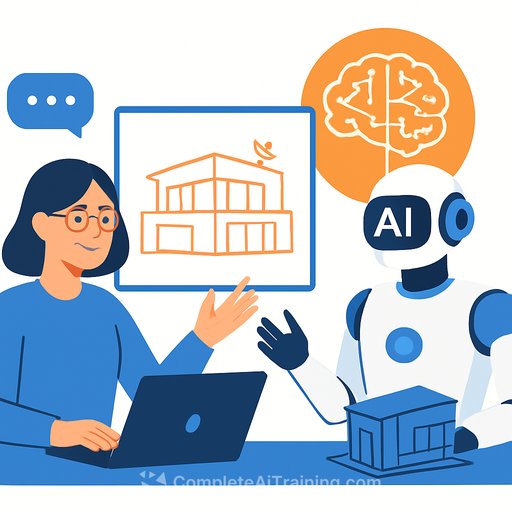
Ming Tang, an architecture professor at the University of Cincinnati, is using AI to accelerate design thinking rather than replace it. His Extended Reality Lab trains students and researchers to treat AI as a collaborator-one that generates starting points for exploration, not finished work.
Tang's approach centers on a simple principle: AI works best when it produces unexpected results. "AI can be too polished or deductive; the most inspiring outcomes often come from its unpredictability," he said.
From Hurricanes to Emotions
The lab applies AI to concrete problems. In a partnership with Cincinnati Insurance Companies, Tang's team uses computer vision to assess building vulnerability to hurricanes. Researchers annotate images and train AI models to classify building components and predict risk.
In the classroom, Tang encourages students to use AI differently. In a course called "Museum of Emotions," students translated abstract concepts into architectural forms using AI image-to-image translation. One student drew inspiration from strawberry textures and colors. Another used the curves of a PlayStation console to explore industrial design elements in a convention center project.
"I want to see students have something to discuss," Tang said. "AI is a quick way to create starting points for conversation and exploration."
Training AI to Avoid Repetition
Tang warns against letting AI become an echo chamber. If you train a model only on one style, it reproduces that style endlessly. Breaking that cycle requires intentional effort.
He values the mistakes. Early experiments with Deep Dream, a primitive AI tool, transformed building images into collages of animal faces-sometimes unsettling, always interesting. Those imperfect results sparked creativity in ways polished outputs never could.
In a graduate visualization course, students designed temporary structures for Burning Man using AI to experiment with erosion, turbulence, and distortion. The goal wasn't a finished rendering on day one. It was iteration.
Specificity Matters
Tang emphasizes that "AI" is too vague. Large language models, computer vision, generative image tools-they work differently and serve different purposes. Without clarity on which tool does what, conversations about AI in creative work go nowhere.
The same applies to teaching. Students need to understand what they're actually using and why. Tang sees his role as helping them use AI as a tool for critical thinking, not as a shortcut past it.
For creatives looking to work with AI, consider exploring AI Design Courses and Generative Art Courses to understand how these tools function in practice.
Your membership also unlocks: