
AI news ·
UC Berkeley Law bans AI from nearly all graded work starting summer 2026
UC Berkeley Law will ban AI use in nearly all graded work starting summer 2026. Students may only use AI for legal research, not writing, drafting, or exams.
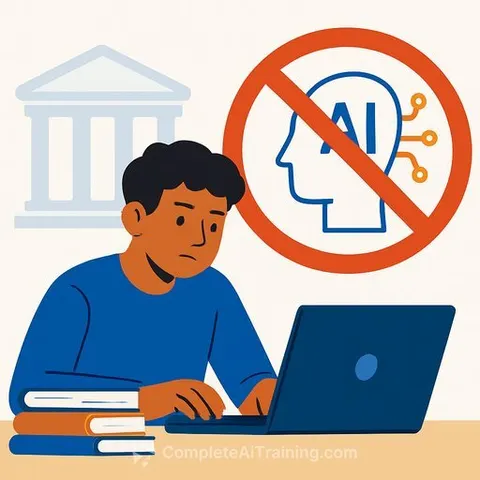
UC Berkeley Law Bans AI in Nearly All Graded Work
Starting summer 2026, UC Berkeley Law will prohibit students from using AI tools in nearly all graded assignments and exams. The ban covers brainstorming, drafting, outlining, writing, revising, translating, and proofreading. Students can use AI only for legal research-finding statutes and case law-but remain responsible for every fact they cite.
The school's reasoning is direct: future lawyers need to develop core thinking skills before AI tools become useful to them. Made-up citations count as proof of banned AI use.
Professors can make exceptions for specific courses, particularly those that teach students how to work with AI effectively.
Why the restriction matters
AI tools speed up legal research and document drafting. They also introduce real risks: undetected errors, embedded bias, and citations that don't exist.
Law schools face a practical problem. Students who rely on AI early in their education may never develop the judgment needed to catch these failures. A lawyer who can't think independently can't evaluate whether an AI tool has made a mistake.
UC Berkeley Law's approach reflects a growing tension in legal education. The profession needs lawyers who understand AI. It also needs lawyers who can think without it.
What's allowed and what isn't
- Banned: Using AI in any graded work except research
- Banned: All exam use
- Allowed: AI for finding statutes and case law
- Allowed: Course-specific exceptions at professor discretion
For legal professionals managing AI in their own work, understanding how law schools approach these tools offers context. Resources on AI for legal professionals cover how these tools function in practice, including their limitations. Those considering how AI fits into legal careers may also find an AI learning path for paralegals useful for understanding where AI adds value and where human judgment remains essential.