New Framework Shifts AI Literacy From Tool Use to Critical Judgment
A University of Canterbury research team has developed the Scaffolded AI Literacy (SAIL) framework to help educators and students think critically about when and how to use artificial intelligence - rather than simply learning which buttons to press.
The framework, led by Professor Kathryn MacCallum from the School of Leadership and Professional Practice, is available to schools and tertiary institutions. It asks a fundamental question: should we be using AI in the first place?
"AI literacy is often mistaken for knowing how to use tools such as ChatGPT, but SAIL asks people to think more critically," MacCallum said. "We get so narrow, we just talk about which button to press. I want to talk about whether we should be pressing that button in the first place."
Three Core Components
SAIL builds literacy through three interconnected areas: understanding key AI concepts, developing practical tool skills, and considering AI citizenship - the responsibilities that come with using AI.
The citizenship component reflects a core premise: AI is not neutral. Users need to understand both its potential benefits and its risks.
"AI can be used for good, but there are also risks we need to understand and respond to," MacCallum said.
Design Reflects Multiple Perspectives
The framework was developed with experts across education, industry, and computer science, alongside Māori and Pacific voices. This deliberate inclusion shaped how the framework approaches AI literacy in Aotearoa New Zealand.
Unlike some AI literacy models, SAIL is scaffolded across levels, allowing learners to build understanding over time. A single framework serves both students and teachers rather than separate versions for each group.
The framework also adapts across ages, contexts, education levels, and disciplines. MacCallum noted that AI literacy can be taught to kindergarten children - the depth and application simply change depending on context.
Informed Choice Over Adoption
SAIL does not assume everyone should use AI. Instead, it helps people make informed decisions about when to use it, when not to, and which tools fit their needs.
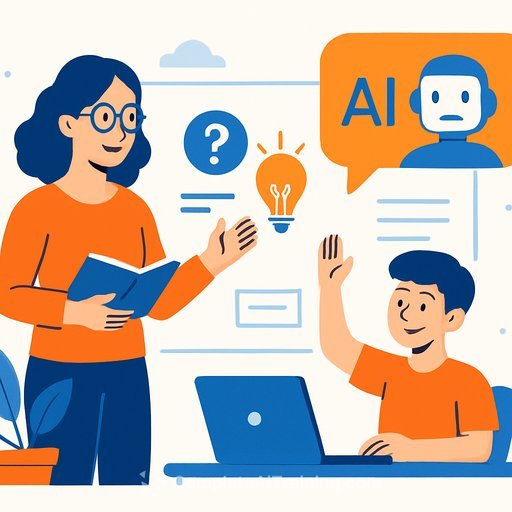
This distinction matters particularly in assistive technology contexts, where AI supports learning rather than replacing it. "We need to think about AI as a supporting tool, not a replacement tool," MacCallum said.
At UC, SAIL has informed short courses and a new Master of AI and Education. MacCallum is also engaging with the Ministry of Education on how AI literacy is framed in curriculum changes and supporting the Education Review Office's research on AI use in schools.
For professionals working in research and education, the framework offers a structured approach to building AI literacy grounded in critical judgment rather than technical proficiency alone. Learn more about AI for Education and AI Research Courses.
Your membership also unlocks: