
AI news ·
UC Merced researchers use AI to improve drought forecasting as California faces dry conditions in 2026
California is sliding back into drought after two years of adequate water, worsened by a March heat wave that melted the snowpack weeks early. UC Merced researchers are using AI to improve forecasting by combining satellite, sensor, and climate data.
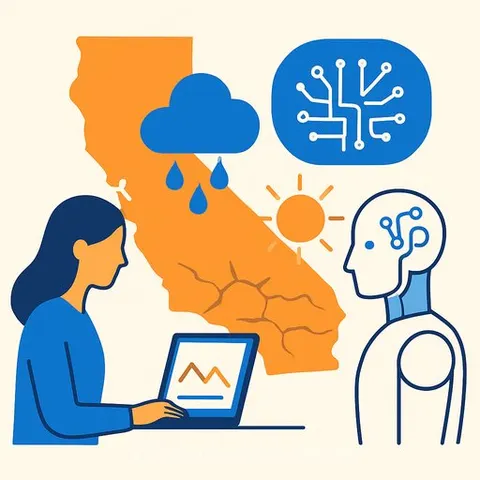
California drought returns as climate swings intensify
California is sliding back into drought conditions after two years of adequate water, the state drought monitor reported in spring 2026. Climate change is making these shifts sharper and faster, forcing water managers and researchers to develop better tools for prediction and response.
A UC Merced research team has contributed a chapter on using artificial intelligence for drought forecasting to a new book published by Elsevier. The book, "Global Drought and Sustainability," brings together more than 40 authors from over 15 institutions across at least 10 countries to examine drought as a growing global challenge.
How AI improves drought forecasting
The UC Merced chapter explains how machine learning can combine satellite imagery, sensor data, climate records and current observations to forecast drought conditions. The approach gives decision-makers earlier and more reliable information without replacing human judgment.
"Drought is becoming harder to manage because conditions can change quickly across farms, watersheds and regions," said Abid Sarwar, project scientist on the team. "Artificial intelligence can help connect satellite observations, field sensors, climate data and physical water processes so decision-makers have better information."
This matters because climate change is creating sharper swings between heavy storms and severe drought. Those shifts affect public health, local economies, agriculture, ecosystems and water supplies.
The California example
California's 2026 spring season illustrates the problem. The state had a healthy snowpack that normally supplies water as it melts through warmer months. A March heat wave, however, melted much of it weeks earlier than usual.
According to the Public Policy Institute of California, more than 5 million acre-feet of water stored as snow was lost in one month. Most of that water never reached reservoirs-some seeped into groundwater, some into soil, and much simply evaporated.
April storms improved conditions slightly, but the remaining snowpack won't contribute much to summer water supplies.
Scaling drought monitoring globally
Forecasting drought is harder in regions without California's monitoring infrastructure. The UC Merced researchers noted that AI can provide a scalable way to complement existing systems, especially where ground observations are limited.
Networks of soil-moisture sensors and weather stations already feed data to machine learning algorithms that optimize irrigation schedules and detect early crop stress. Satellite sensors monitor temperatures, soil conditions and vegetation health across large areas.
Better drought forecasts help farmers protect crops, communities conserve water and officials prepare before conditions worsen.
The research appears in a book that explores connections between drought and climate change while outlining science-based solutions for water management, agricultural sustainability and ecosystem resilience. Learn more about AI data analysis and AI for management applications in resource planning.