
AI news ·
UC Santa Cruz researchers combine AI and brain organoids to study how neural circuits form and fail
A human brain organoid outperformed an audience volunteer at a pole-balancing task after 30 minutes of training, as UC Santa Cruz researchers pair living brain tissue with AI to study neural circuits. Working prototypes could arrive within two years.
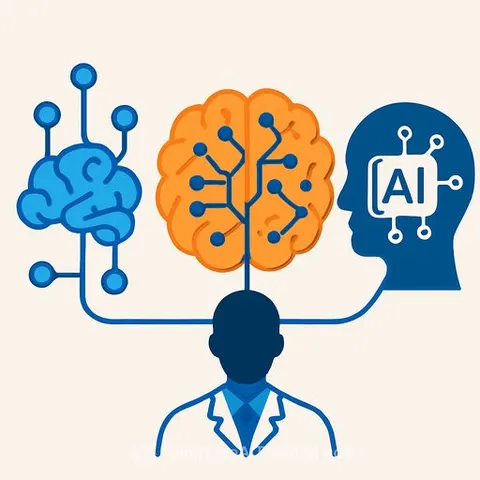
Brain Organoids and AI Team Up to Decode Neural Circuits
Researchers could have working prototypes within two years of a platform that pairs artificial intelligence with living brain tissue to understand how neural circuits develop and fail. The technology combines two decades of work in organoid research with recent advances in AI, positioning neuroscience to move from observation to systematic experimentation at scale.
The Braingeneers, an interdisciplinary research group spanning UC Santa Cruz, UCSF, UCSB, Stanford, and Washington University St. Louis, demonstrated the concept in May at a gathering in Menlo Park. Attendees watched a human brain organoid learn to balance a pole on a cart-a task from mechanical control theory-after being hooked to a virtual environment for roughly 30 minutes.
The organoid outperformed a volunteer from the audience attempting the same game. Ash Robbins, a postdoctoral scholar with the group, said the result proved the tissue was solving the problem through learning, not chance.
From Lab Curiosity to Medical Tool
Brain organoids are three-dimensional structures grown from human stem cells that mimic aspects of the developing brain. The Braingeneers have developed methods to grow them at scale, record their electrical activity, and train them using reinforcement learning-the same approach used in AI systems.
A second demonstration showed AI models recognizing and responding to seizures induced in organoids. The researchers labeled the AI systems with personas from a television medical drama-"Intern," "Resident," and "Attending Physician"-as they successfully identified neural distress and administered drugs to calm the tissue.
The group's ambition extends far beyond demonstrations. They plan to grow thousands of organoids simultaneously and use AI to learn how neural connections develop and where they fail in disease. The NIH recently selected the Braingeneers to lead the AI-driven Brain Cell Data Explorer for the BRAIN Initiative, and they serve as the analysis center for a National Institute of Mental Health project investigating 250 genes linked to neurodevelopmental and neuropsychiatric disorders.
The AI Partnership
Jure Leskovec, a Stanford computer scientist and pioneer in graph neural networks used by Facebook, Pinterest, and Amazon, presented his lab's work on foundation models for biology. These AI systems learn universal representations of biological cells and tissues across different cell types and species-essentially becoming fluent in the language of cells the way large language models understand human text.
Combined with the organoid platform, these tools could let researchers understand how neural circuits respond to drugs and malfunction in disease at speeds previously impossible.
Questions Before Scale
David Haussler, Scientific Director of the UC Santa Cruz Genomics Institute, explicitly framed the challenge ahead: "I want us to really engage with the question of what happens if we succeed."
The gathering included funders, ethicists, and researchers who have spent careers on pieces of this puzzle. Bob Klein, who led California's $3 billion stem cell research investment, attended alongside leaders from organizations focused on brain disease treatment and research ethics.
Hank Greely, Director of Stanford's Center for Law and the Biosciences, led a discussion on necessary safeguards. Under Chatham House rules, attendees raised concerns about governance, unintended consequences, and power concentration as AI systems interact directly with human brain tissue.
Others emphasized that organoid research has already contributed to potential treatments for epilepsy and other disorders. They argued that deeper understanding of neural circuits could transform care for billions affected by neurological and psychiatric conditions. Participants widely agreed that ethical guardrails must develop alongside the science, with ongoing partnership between researchers and ethicists, philosophers, and social scientists.
Building the Partnerships
UC Santa Cruz is positioning itself as an organizing force rather than a solo researcher. The scale of the work-thousands of parallel experiments over months-requires funders, technology partners, and experts in ethics and governance.
"This is the beginning of something very big," Haussler said. "It's too big for any one institution to take on the whole project, but we're working to coordinate partnerships that can reshape the future in a way that benefits us all."
For researchers exploring how AI applies to scientific discovery, AI for Science & Research covers laboratory optimization, data analysis, and research automation in detail.