UC secures $1M+ grant to bring AI into medical education
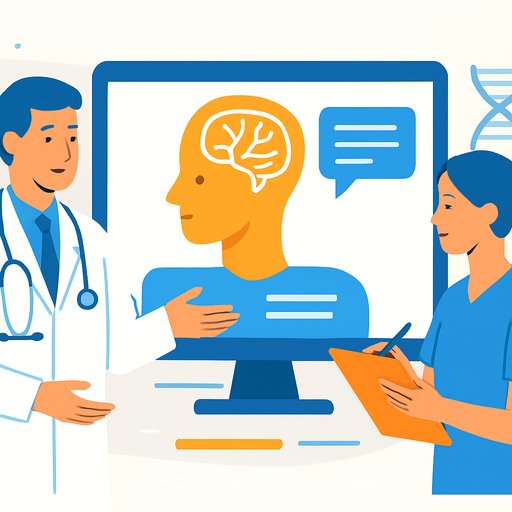
Artificial intelligence is moving upstream in health care-into the classroom, where clinical habits are formed. The University of Cincinnati School of Medicine earned a grant of over $1 million to build personalized, AI-driven training for physicians in training. The focus: consistent, high-quality feedback at the exact moment it's needed.
- UC received a grant to expand AI use in medical education.
- Training begins in the classroom, not at the bedside.
- Goal: solve the shortage of timely, high-quality feedback for clinical learners.
How UC will use the grant
Students will use tools already in their environment-AI glasses and smartphones-to securely capture clinical interactions for analysis and coaching. That data will inform real-time, individualized feedback on communication, clinical reasoning, and patient rapport.
"I've always been interested in how AI and medicine can be used jointly," said UC medical student Ivy Xue. "Being able to get more reps in and get more individualized feedback, real time, I think it will be a really great improvement."
UC has also deployed a web-based simulator that mirrors patient encounters across all four years of medical school and is working to extend it into residency. "What's great about this is it allows students to do reps," said Laurah Turner, associate dean and assistant professor of medical education.
The system adapts to each learner. "If a learner always forgets to take a social history or doesn't really have a great rapport, the system learns about that and then adapts and provides more cases or scenarios like this," Turner said.
The award is part of the American Medical Association's Accelerating Change in Medical Education initiative, which selected 11 teams from nearly 200 applicants.
Why this matters for educators
- Close the feedback gap: Shift from occasional evaluations to continuous, context-rich coaching.
- Scale practice opportunities: Use simulated and real encounters to increase "reps" without overloading faculty.
- Personalize learning: Let adaptive cases target each learner's blind spots (e.g., history-taking, rapport, diagnostic reasoning).
- Integrate across the continuum: Thread cases through preclinical, clinical, and residency phases for reinforced habits.
- Blend modalities: Pair standardized patients with wearables and simulators to capture communication, decision-making, and outcomes.
- Operationalize reflection: Use recordings and transcripts to guide debriefs that stick.
Inside the learner experience
Students currently work in team-based standardized patient rooms with limited feedback windows. AI expands that window: more encounters, more immediate guidance, and targeted scenarios that meet each learner where they are.
Xue sees clear clinical upside, noting AI's potential to support more accurate detection and faster decisions at the point of care. For trainees, that means building the habit of systematic thinking early-then reinforcing it with data-backed feedback.
What to do if you lead curriculum or assessment
- Start with one course or clerkship and define 3-5 observable behaviors to track (e.g., social history, clinical reasoning steps, patient-centered language).
- Use short simulations to prime skills, then apply them in real or standardized encounters captured by wearables.
- Establish a feedback protocol: immediate micro-coaching, weekly pattern review, and a quarterly performance map.
- Let the system adapt: assign cases that stress the exact skills each learner underuses.
- Build guardrails: clear consent workflows, privacy policies, and faculty training for consistent use.
If you're exploring classroom AI strategies, see AI for Education. For faculty building scalable coaching systems, the AI Learning Path for Training Instructors can help frame pilots and assessments.
The bottom line: UC's program turns AI into a daily practice tool-more reps, better feedback, and smarter cases that adapt to each learner. That's a practical path any medical program can model with the right safeguards and clear outcomes.
Your membership also unlocks: