
AI news ·
UCLA Health launches center to evaluate AI safety and implementation in health care
UCLA Health launched the INOVAi Center on June 11, 2026, to test AI safety in clinical care. Trials show AI scribes cut physician note-writing time and reduce exhaustion.
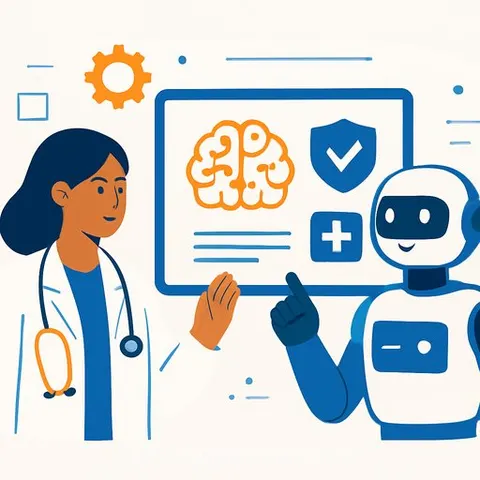
UCLA Health launched the Innovations and Outcomes Validation of AI (INOVAi) Center on June 11, 2026, to test artificial intelligence safety and implementation in clinical settings. The program addresses a critical gap in medical technology: proving that AI tools function reliably and safely in real-world patient care before widespread adoption.
Evaluating AI across the clinical lifecycle
The center evaluates AI tools from early usability and workflow testing through prospective clinical trials. This approach responds to the growing presence of AI in hospitals, where systems now draft clinical notes during visits and assist physicians in interpreting diagnostic imaging. By testing these tools where patients actually receive care, the center seeks to build a verified evidence base for clinical deployment.
"This new center will help address one of the most important gaps in health care AI - knowing whether these tools are safe, effective and useful in real-world clinical practice," said Johnese Spisso, president of UCLA Health and CEO of the UCLA Hospital System.
Early results on clinical workflow
INOVAi is co-directed by Dr. Paul Lukac, UCLA Health's chief AI officer, and Dr. John Mafi, an associate professor of medicine. Their recent randomized trial demonstrated that AI medical scribes significantly reduced the time physicians spent writing clinical notes. The study also recorded improvements in physician cognitive load and overall well-being, while reducing work exhaustion. Physicians reported higher patient engagement due to increased connectivity during visits.
"The results of our research on AI's capacity to improve clinical workflow and enhance patient care have been promising thus far," Lukac said. "While there still is considerable work to be done, our new program has the potential to further hone the discipline the field needs as we continue to build a shared language for what counts as evidence."
Building a coordinated research ecosystem
The initiative operates under the UCLA Department of Medicine and coordinates with broader AI for Healthcare initiatives at the university. Dr. Steven Dubinett, dean of the David Geffen School of Medicine at UCLA, said the center strengthens a coordinated ecosystem for evidence-based health technology. This structure ensures AI evaluation remains separate from vendor marketing.
Katherine P. Andriole, associate dean for Health AI Strategy and Innovation, said rigorous clinical validation is essential as these tools change care delivery. The center will help researchers and clinicians establish clear standards for what constitutes valid evidence in medical AI. Professionals exploring AI for Science & Research will likely watch this model closely, as it provides a blueprint for validating algorithmic tools in high-stakes environments.
Why this matters for science and research professionals
Researchers developing or deploying AI in clinical environments face increasing scrutiny over safety and efficacy. The INOVAi model demonstrates how institutions can bridge the gap between algorithm development and large-scale implementation through rigorous, prospective testing. Science professionals can apply these evaluation frameworks to their own domains, demanding concrete metrics for cognitive load reduction and workflow efficiency rather than relying on vendor claims.