
AI news ·
UCLA researchers receive $3.2 million NIH grant to develop AI tool for personalized liver cancer treatment
UCLA secured a $3.2 million, five-year grant to build an AI imaging platform for liver cancer. The system will improve radiation therapy planning by analyzing patient scans.
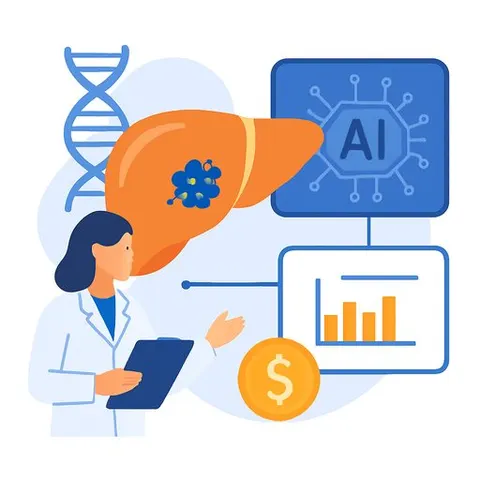
UCLA researchers have secured a $3.2 million, five-year grant from the National Cancer Institute to build an artificial intelligence-enhanced imaging platform aimed at improving liver cancer treatment planning. The project, led by Jason Chiang and Kyung Sung of the David Geffen School of Medicine at UCLA, will focus on refining yttrium-90 (Y90) radioembolization, a targeted radiation therapy for liver tumors.
The grant and the research team
Chiang and Sung are both in the Department of Radiological Sciences at UCLA and are members of the UCLA Health Jonsson Comprehensive Cancer Center. The five-year award comes from the National Cancer Institute, part of the National Institutes of Health. Their work reflects a broader push to apply AI for Healthcare in radiology, where imaging analysis can directly affect treatment decisions.
How AI could enhance treatment planning
Y90 radioembolization involves delivering radioactive microspheres through the hepatic artery to irradiate liver tumors while sparing healthy tissue. Current planning relies on pre-treatment imaging to map blood vessels and calculate the ideal dose. The new AI platform will analyze these images to produce more precise, patient-specific treatment plans.
The researchers aim to integrate the AI tool into existing clinical workflows, potentially reducing the time clinicians spend on manual image analysis and improving dose accuracy.
Why this matters for Science and Research
For scientists and researchers, the grant demonstrates the NIH's commitment to funding AI-driven translational projects that bridge computation and clinical care. The five-year timeline allows for rigorous validation studies, which are essential for regulatory approval and clinical adoption. The platform's development may also generate new imaging datasets and algorithms that could be repurposed for other interventional oncology applications. As AI for Science & Research continues to mature, projects like this offer a template for how machine learning can move from bench to bedside.