UConn Health Expert Pushes AI Equity Conversation in Connecticut Schools
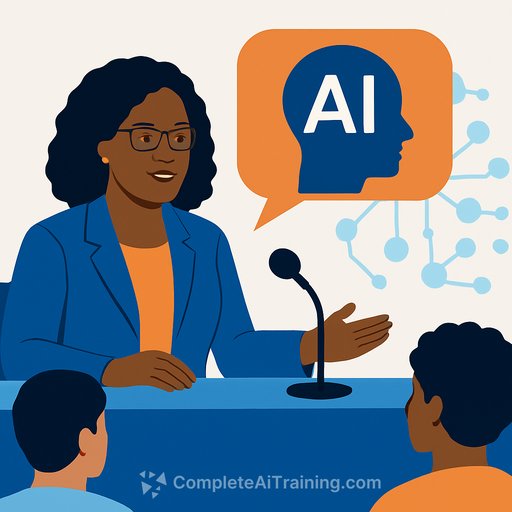
Dr. Linda Barry of UConn School of Medicine brought health equity concerns to a statewide forum on artificial intelligence and communities of color on March 25. The webinar, hosted by Connecticut's Commission on Women, Children, Seniors, Equity & Opportunity, gathered educators, policymakers, and community leaders to discuss how AI shapes education, hiring, and technology access.
Barry is a professor of surgery and public health sciences, associate director of the UConn Health Disparities Institute, and associate dean of the Office of Multicultural and Community Affairs. She framed AI as an equity problem, not just a technical one.
AI Can Deepen or Reduce Inequality
"AI has enormous potential to expand access to information, care, and opportunity-but only if we are intentional about equity from the start," Barry said during the discussion.
She flagged specific risks: biased data sets, opaque algorithms, and tools that don't fit the communities they're meant to serve. When communities of color aren't involved in designing AI systems, she said, those systems often reproduce the inequities they claim to fix.
Barry stressed the need for cultural humility in developing AI for schools and healthcare. She also called for creating pathways for young people of color-particularly girls and underrepresented students-to enter AI and technology careers.
The Digital Divide Is a Health Divide
Barry connected technology access directly to health outcomes. "When we talk about the digital divide, we are also talking about a health divide, an opportunity divide, and a power divide," she said.
Access to accurate information and accountable systems, she argued, affects whether people can benefit from AI tools or get left behind by them.
What Educators Should Know
The webinar covered four areas relevant to schools:
- Educational innovation through AI for Education tools
- Career pipeline development in AI fields
- Community-driven solutions and grassroots initiatives
- Removing systemic barriers to technology access
Understanding Generative AI and LLM design and governance matters for educators because these tools are already entering classrooms. How they're built and who builds them determines whether they help or harm students from underrepresented communities.
Barry's message to educators was direct: "If we want AI to work for our communities, our communities have to be in the room-as creators, decision-makers, and beneficiaries."
Connecticut's Commission on Women, Children, Seniors, Equity & Opportunity has posted the full webinar online.
Your membership also unlocks: