AI-run legal practice secures £30,000 settlement for UK worker - no tribunal, no solicitor
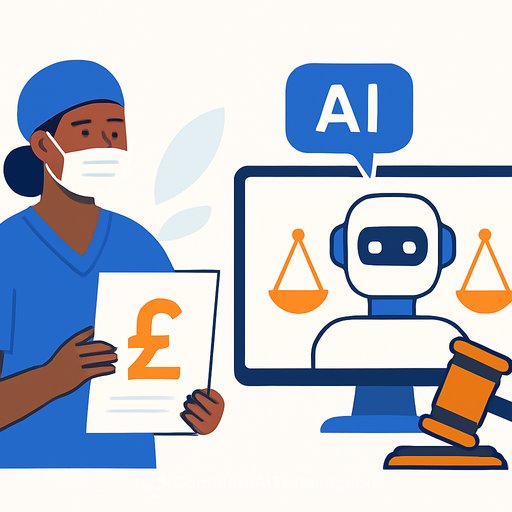
A UK healthcare worker has secured a £30,000 settlement after using an AI-operated legal service to challenge a Performance Improvement Plan. Grapple Law - described as the UK's only bot-run legal practice for individuals - handled intake, drafted letters, and negotiated the outcome within weeks. No tribunal. No human lawyer.
According to the company, this is the first known instance in the UK where an AI negotiated a settlement on behalf of an individual. The service is currently free to use via grapple.law.
What happened
The employee had a strong performance history but was placed on a PIP and feared losing her job without the means to hire a solicitor. She used Grapple Law's AI to structure her case, draft a grievance, and issue a without-prejudice letter.
"I was terrified of the financial impact of losing my job and felt completely outmatched by my employer's legal team," she said. "The AI helped me understand I had a strong case and turned my scattered thoughts into a clear, compelling grievance and without-prejudice letter. The outcome was truly empowering."
How the system worked
Grapple's workflow is straightforward: users describe the issue, upload evidence, receive a rights explainer, and approve AI-drafted correspondence. The platform then handles communications and negotiation. In this case, the outcome was a £30,000 settlement - achieved without a tribunal or traditional legal representation.
CEO Alex Monaco called it "a turning point," adding: "For me, this is proof of concept - proof that it works." He framed the result as expanding access to fast, affordable support for individuals who can't fund upfront legal fees.
Why this matters for legal professionals
Consumer-side legal delivery is shifting. If AI can triage facts, map rights, and produce credible letters that prompt settlement, claimant expectations on speed and cost will reset. That puts pressure on firms to re-think intake, drafting, and negotiation processes - especially for high-volume employment disputes.
On the defense side, expect more structured, persistent claimant communications and earlier settlement posturing. On the claimant side, hybrid models (AI-first, lawyer-on-demand) may emerge for cases that escalate beyond correspondence.
Practical considerations for your practice
- Triage: Automate early fact patterning, risk scoring, and document requests to reduce time-to-first-letter.
- Drafting: Use AI to generate first drafts for grievances, without-prejudice letters, and schedules of loss - with human review for nuance and risk.
- Evidence discipline: Standardize uploads, metadata, and chain of correspondence to support clean negotiation narratives.
- Client updates: Provide short, frequent status summaries; AI can help maintain cadence without draining fee-earner time.
- Fee models: Consider fixed-fee or outcome-based pricing for pre-action resolution work where AI boosts speed.
Compliance and risk
Tools like this raise familiar questions: competence, supervision, confidentiality, discrimination risks, and data protection. Humans remain accountable for advice and oversight - especially in regulated work and reserved activities.
- Regulation: Review SRA expectations on technology use and accountability. See the SRA's AI guidance: SRA AI Guidance.
- Employment process: Ensure grievance and settlement steps align with good practice. ACAS resources are a useful baseline: ACAS: Settlement agreements.
- Privacy: Check data handling, storage location, and third-party model access; update client T&Cs and privacy notices.
- Bias and quality: Monitor output for factual errors and tone. Build a review loop for sensitive communications.
What to watch next
- Scope of matters where AI-only correspondence drives settlement (PIPs, unpaid wages, small claims, consumer disputes).
- Employer-side response patterns and whether early settlement increases to avoid litigation costs.
- Regulatory views on bot-led negotiations and thresholds that require human supervision.
- Client appetite for AI-first services versus hybrid models with lawyer escalation.
Key details
- Outcome: £30,000 settlement; no tribunal.
- Process: AI-led intake, drafting, and negotiation.
- Access: Grapple Law is currently free to use - start at grapple.law.
Bottom line for legal teams
AI is already shaping pre-action negotiation. If you operate in employment or consumer disputes, pressure-test your intake, drafting, and settlement playbooks now. The firms that standardize and automate the first 80% of repeatable work - while preserving sharp human judgment for the last 20% - will set the pace.
Note: This article is for general information and is not legal advice.
Further learning
If you're exploring practical AI skills for your team, see role-focused options here: Complete AI Training - Courses by Job.
Your membership also unlocks: