
AI news ·
UK Government Revises Controversial Copyright Proposals Affecting AI Training Rights
The UK government is reconsidering copyright reforms that let AI firms train models on copyrighted works without permission. Creators push for stronger protections amid legal disputes.
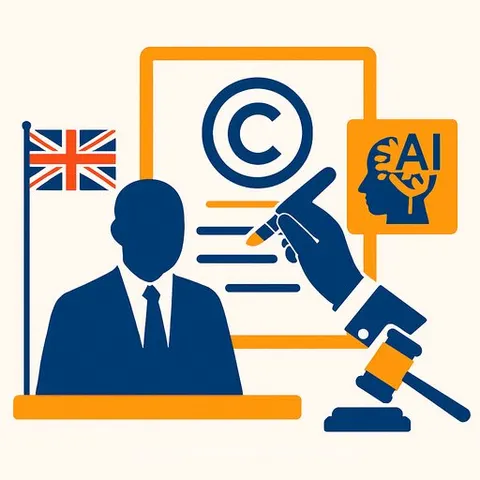
UK Government Reconsiders Copyright Laws Favoring AI Companies
The UK government is revisiting its proposed copyright reforms that would grant AI companies the right to train their models using copyrighted works without seeking permission. Initially, the plan was to provide blanket rights with only an opt-out option for copyright holders. However, there remains uncertainty about how that opt-out would be implemented effectively.
These proposals are part of the upcoming Data (Use and Access) Bill, which aims to boost AI development across the UK. The bill also includes provisions for AI Growth Zones, targeting economically challenged areas to become AI hubs by accelerating infrastructure for energy-demanding AI data centres.
Concerns from Creative Industries
Artists and creators have voiced strong opposition, highlighting the potential economic harm to the UK’s creative sectors. The government has been urged to reconsider the broad rights initially proposed. Reports indicate that the technology secretary, Peter Kyle, is reviewing the consultation feedback and exploring alternatives beyond the copyright holders’ opt-out.
In response, the technology secretary said, “We’re listening to the consultation and we are absolutely determined to get this right. We can’t pretend we can outlaw training in other countries who have their own copyright law, but we can build a system which works in the United Kingdom.” He added that some consultation elements have yet to be fully discussed and promised to work towards solutions that support both creative industries and AI companies.
Shift Towards Licensing Agreements
Instead of broad, automatic rights, the government is now considering encouraging licensing deals between copyright holders and AI firms. However, critics remain cautious. Lady Kidron, a cross-bench peer in the House of Lords campaigning against the original proposals, stressed that any new approach must include a clear, firm commitment to protect copyright holders’ interests.
The concern is that the Data Bill’s final version might still offer only superficial protections, failing to address the core issues raised by rights holders.
Legal Actions and Industry Challenges
Several legal cases have already been filed by copyright holders against AI companies for unauthorized use of protected material. Getty Images, for example, sued Stability AI for generating images scraped directly from its site, with watermarks still visible in the AI outputs.
At the same time, AI developers acknowledge the challenge of building effective generative AI tools without access to copyrighted content. OpenAI has admitted that creating models like ChatGPT would be “impossible” without such material.
For government officials, balancing the growth of AI technology with the protection of creative rights remains a delicate task. The outcome of the Data (Use and Access) Bill will be a key factor in defining that balance.