UK weighs social media curfews and AI chatbot limits for children: What PR and communications teams need to know
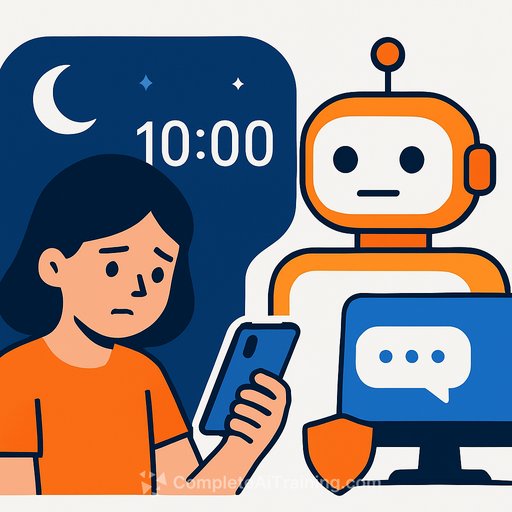
Ministers are consulting on overnight social media curfews for children, age limits for sign-ups, and new restrictions on access to AI chatbots. The goal: reduce late-night scrolling, curb harms, and set clearer guardrails for under-18s online.
The Department for Science, Innovation and Technology (DSIT) will ask parents, guardians, and young people for views on measures including Australia-style restrictions. Technology Secretary Liz Kendall said a "great childhood" should apply online as much as offline, and urged families to contribute to the consultation.
What's on the table
- Overnight curfews on children's use of social media.
- A potential minimum age for social media accounts.
- Limits on children's access to AI chatbots, with stronger duties for providers.
- Platform changes that reduce "addictive" features, such as infinite scroll and autoplay.
The policy backdrop
The government has signalled tougher enforcement against illegal AI-generated content and warned that chatbot makers that put children at risk could face heavy fines or even blocking in the UK. Ministers also plan to close a legal loophole so all chatbot providers fall under illegal content duties in the Online Safety Act.
Children's safety advocates back the shift. Chris Sherwood, chief executive of the NSPCC, said the status quo is not working for families trying to keep children safe.
For reference, see the Online Safety Act and the ICO's Children's Code.
Timeline and process
- Consultation opens Monday and runs until 26 May.
- Government aims to publish its response in the summer.
- Ministers, including the Prime Minister and Technology Secretary, have pledged swift legislative action based on the findings.
Why this matters for PR and communications
If night-time access for under-18s is curtailed, youth-focused campaigns will see reach and engagement patterns shift. Creative that leans on autoplay or infinite scroll may underperform if platforms are compelled to switch these off for younger users.
Any AI assistants on brand sites and channels used by teens may require stronger age assurance, safety filters, and clear escalation paths to human help. Influencer partnerships involving minors will face tighter scrutiny and likely new disclosure and scheduling expectations.
Action list for teams
- Audit audience exposure: model the impact of potential curfews on your posting times, paid flighting, and creator drops.
- Prepare dual content plans: one that assumes status quo, and one that reallocates youth activity to daytime and early evening.
- Review product and platform dependencies: identify assets reliant on autoplay, infinite scroll, or algorithmic boosts that may be limited for under-18s.
- Assess your AI touchpoints: add stricter content filters, improve safety prompts, and log handoffs to human support for teen users.
- Tighten age and consent flows: confirm age-gating, parental consent, and data minimisation align with the Children's Code.
- Update influencer briefs: set posting windows, audience targeting guidance, and wellbeing guardrails for creators with young followings.
- Draft holding lines and FAQs: explain changes simply for parents, schools, and youth groups; be ready for fast policy shifts.
- Coordinate with legal and policy teams: align on risk registers, approvals, and escalation if platforms roll out changes with short notice.
Messaging cues that build trust
- Lead with wellbeing: frame changes as sleep, study, and mental health benefits without patronising teens.
- Be transparent about features: if autoplay or streaks change, explain what's different and why.
- Offer alternatives: promote daytime content, on-demand recaps, and parent-teen conversation guides.
Risks to manage
- Compliance drift: fragmented rules across markets can create inconsistent experiences.
- Backlash from creators and fans: prepare clear rationale and flexible posting schedules.
- Data and duty of care: AI chatbots that give advice to teens may trigger higher safety expectations and record-keeping.
- Measurement swings: expect lower late-night impressions; rebalance KPIs toward quality daytime engagement.
What to watch next
- The scope of any curfew (hours, age bands, enforcement mechanics).
- Platform readiness: whether major networks roll out teen-specific modes or global feature changes.
- AI provider obligations: standard safety rails, age checks, and audit requirements for chatbots.
- Cross-border implications for global campaigns run from UK teams.
Helpful resources
Bottom line: act now. Rework schedules, harden AI safeguards, and prepare clear parent-and-youth messaging so you can move the moment the consultation wraps.
Your membership also unlocks: