AI-Driven Interceptor Drones: An Operations Brief for Defense Teams
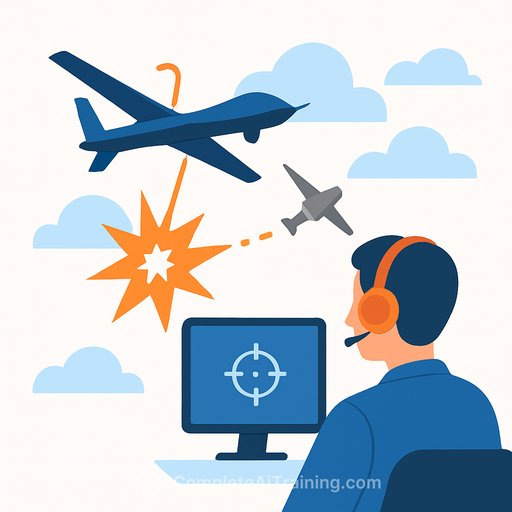
Artificial intelligence is now embedded in unmanned interceptors across the Ukrainian battlespace. The intent is clear: automate what's repeatable, speed up reaction times, and keep a human operator in control of lethal decisions. This shift is less about hype and more about throughput, reliability, and tight process control.
Supply volumes signal the scale. The force is receiving more than 1,500 interceptor drones per day, a strong indicator that counter-air capabilities are being built for sustained, high-tempo operations. The constraint isn't just hardware. Guidance quality, weather readiness, and operator workflow are now the levers that determine real effectiveness.
What's Working Right Now
- AI-assisted target acquisition and guidance have been used intensively for a year.
- Some interceptors can fly to a designated sector and engage hostile drones (including Shahed-class targets) with minimal operator input.
- Operators remain in the loop for lethal action. AI handles speed and precision; humans decide.
- Stand-off engagements are increasingly common. Crews can launch from ~25 km and prosecute targets without line of sight.
The Gap: Guidance Effectiveness
Despite progress, current guidance systems are not hitting a reliable 70% success threshold. That shortfall compounds at scale: every percentage point matters when you're fielding thousands of sorties. Closing the gap requires better sensing, prediction, and control logic-without sacrificing operator oversight.
Weather and Winter Readiness
Cold, snow, and icing reduce flight availability. Pre-flight treatment (similar to de-icing in aviation) helps, but it's a throughput drag. The near-term goal is product improvement: hardening airframes and components, optimizing batteries for low temps, and standardizing winter checklists. Some upgrades will take time due to technology and supply constraints.
Next Capability Wave to Watch
- Shift from visual guidance to command guidance: systems that see the aerial target, predict trajectory, and direct interceptors with higher precision.
- Tighter integration with layered air defense: interceptors become one node within a sensor-to-shooter network rather than a standalone asset.
If you're aligning plans with doctrine, review integrated air and missile defense principles to structure your C2 and data flows. See NATO's overview of IAMD for context: NATO IAMD.
What This Means for Operations
- Process first: Build SOPs that define when AI assists, when operators take control, and how handoffs occur under time pressure.
- C2 integration: Ensure interceptors ingest the same track data as other shooters and cue sensors. Latency kills success rates.
- Supply throughput: Receiving 1,500+ units per day demands industrial-grade intake, QA, battery management, and spares tracking.
- Training cadence: Expand operator pipelines and sim-based drills focused on target ID, escalation criteria, and abort logic.
- Feedback loop: Every sortie should feed into a data layer that improves guidance, tactics, and maintenance cycles.
Metrics That Matter
- Intercept success rate (by target class, altitude, and speed)
- Time-to-intercept from first detection to kill assessment
- Operator workload (alerts per hour, handoffs, fatigue risk)
- False positive rate and abort reasons
- Weather availability (sorties scrubbed, cold-weather failure modes)
- Sustainment KPIs (mean time between failures, battery health, turnaround time)
Scaling the Supply: Practical Considerations
- Standardize intake and QA: barcode/UID tracking, firmware checks, and burn-in tests before fielding.
- Battery logistics: charging infrastructure, cycle tracking, and cold storage protocols.
- Spare parts buffer: motors, props, sensors, and protection kits sized by failure data, not guesses.
- Field service kits: swap-in modules and quick diagnostics to keep units in the fight.
Guidance System Improvement Plan
- Data capture: retain high-fidelity flight and sensor logs (including misses) to train better models.
- Sim-first testing: validate guidance tweaks in simulation before live ops.
- Command guidance trials: incremental rollouts on defined corridors with clear fail-safes.
- Operator ergonomics and Design: reduce cognitive load with concise cues and outcome-focused interfaces.
Leadership and Org Readiness
Technology-forward leadership will accelerate adoption. Two priorities stand out: start pilot pipelines for future platforms early (e.g., F-16 crews trained for 2030 readiness), and digitize mobilization and personnel systems to reduce time-to-field. The more your org runs on clean data, the faster you can adjust tactics and inventory.
30-60-90 Day Action Checklist
- 30 days: Lock SOPs for human-in-the-loop decisions. Stand up a sortie data registry. Baseline success metrics.
- 60 days: Launch winter-hardening workstream. Deploy sim tests for guidance updates. Scale battery handling standards.
- 90 days: Pilot command guidance in a controlled sector. Integrate interceptor tracks into layered air defense dashboards. Publish quarterly intercept and sustainment KPIs.
Responsible Use and Control
Operator control remains non-negotiable. AI speeds up detection, guidance, and decision support, but lethal action needs human authorization. Keep audits tight: log decisions, outcomes, and overrides to preserve accountability and improve the system.
Upskilling Your Team
If your operations unit is building AI fluency for decision systems, you can review practical training options here: AI courses by job. For automation-focused workflows, see: Automation resources.
Bottom line: the interceptor fleet is scaling fast, but effectiveness hinges on guidance quality, weather readiness, data discipline, and operator workflow. Treat this as an end-to-end operations challenge-procurement through debrief-and the success rate will follow.
Your membership also unlocks: