AI helps Ultranav enhance operational safety
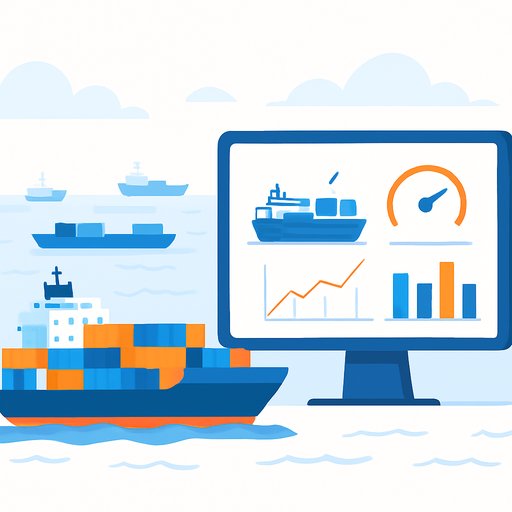
Ultranav is rolling out artificial intelligence across more than 420 managed vessels to strengthen operational surveillance and reduce incidents. After a focused pilot in one business unit, the Chile-based group will implement ShipIn Systems' FleetVision on tankers, bulk carriers, container ships, gas carriers, and over 90 harbour tugs and offshore support vessels.
The program integrates FleetVision's bridge, safety and technical modules with onboard camera systems. The goal: scale AI-enabled safety and navigation risk management while complementing established safety management practices already in place.
What changed in day-to-day operations
"By running the pilot within a single business unit, we were able to test FleetVision against the realities of our operating profile," said Ultranav head of vetting, health, safety, quality, security and the environment (HSQE), Alfredo Mella. "That approach helped us understand where the platform adds value in everyday operations and how it could be scaled responsibly across additional vessels."
During the pilot, crews and shore teams saw clearer, more consistent visibility into how work is performed onboard. That insight helped identify patterns earlier, focus attention on higher-risk activities, and support safer day-to-day decision-making without disrupting established routines.
"The value for us was in how FleetVision supported a more consistent and structured view of operational risk," said Ultranav senior manager and head of insurance, Felipe Alberto Carrillo. "That visibility helps strengthen risk assessment, supports clearer discussions with operational teams, and improves how risk is managed across the fleet."
How FleetVision supports ops teams
- Uses AI and computer vision to analyse onboard video across navigation, safety and technical areas.
- Delivers structured insight into bridge activity, onboard safety practices and technical conditions.
- Creates shared visibility for ship and shore to support aligned decision-making with HSQE and technical teams.
- Integrates with existing camera systems and complements current safety management workflows.
- Scales across multiple vessel types and operating profiles.
Ultranav will continue working with ShipIn to review FleetVision insights as part of broader safety culture initiatives and fleet risk management.
If you want to understand the platform behind this rollout, see ShipIn Systems. For context on safety management frameworks many operators use alongside such tools, review the IMO's International Safety Management (ISM) Code.
Playbook for operations leaders
- Start with a focused pilot in a single business unit to test assumptions and confirm value.
- Define a small set of priority risk signals (e.g., bridge resource management, mooring operations, confined-space practices) and measure them consistently.
- Set governance early: recording policies, data retention, access controls, and crew privacy expectations.
- Train for adoption, not features-clarify how insights inform routines without adding workload.
- Create a ship-shore feedback loop so HSQE and technical teams close the loop on detected signals.
- Scale in waves by vessel class and trade, updating SOPs only where the data proves a clear benefit.
- Review insights in standing safety meetings and use them to inform targeted coaching and near-miss learning.
Metrics to watch
- Incident and near-miss rates, segmented by operation type.
- Frequency of higher-risk signals and time from detection to intervention.
- Bridge procedure adherence and quality of safety observations.
- Shore-ship alignment: response times, clarity of corrective actions, closure rates.
- Audit findings tied to operational practices (pre- and post-deployment).
- Crew adoption: engagement in reviews, feedback quality, and training completion.
What's next
Ultranav is advancing FleetVision across its fleet and reviewing insights as part of ongoing safety culture and risk management programs. Industry peers will continue this conversation at Tankers 2030 in Singapore on 19-20 November 2026.
If you're building a similar roadmap, explore the AI Learning Path for Operations Managers for practical frameworks on piloting and scaling AI in day-to-day operations.
Your membership also unlocks: