
AI news ·
UN scientific panel finds AI capabilities outpace global governance
A new UN AI report warns current safeguards cannot manage advancing AI. A 40-expert panel from 37 nations found a widening gap between AI capabilities and global governance.
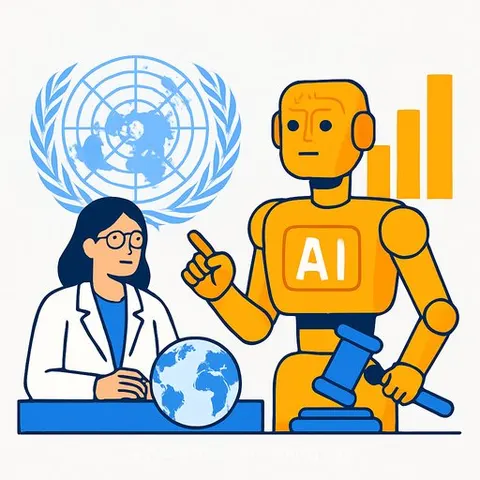
Yoshua Bengio, founder of Mila, is co-chairing the first report from a new UN Scientific Panel on AI, a collaborative effort involving 40 experts from 37 countries working independently of governments or corporations. The preliminary findings reveal a widening gap between accelerating AI capabilities and the ability of policymakers to effectively govern them, highlighting a critical need for evidence-based understanding.
The panel, established last year through a UN General Assembly resolution, provides independent, science-based evaluations of AI's opportunities and risks. The composition-experts contributing in their personal capacities, deliberately avoiding affiliations with governments, corporations, or institutions-underscores the intent to offer truly international scrutiny. This approach aligns with the rigorous scientific methods valued in AI for Science & Research, applying independent analysis to a field often driven by commercial interests.
Safeguard Gaps and the Need for Scientific Literacy
The report states, "Public policymakers cannot govern what they do not understand," signaling a pressing need for increased scientific literacy among those responsible for AI policy. UN Secretary-General António Guterres said leaders "can no longer claim otherwise" regarding available scientific data, framing the report as removing a key excuse for inaction. Current safeguards, the panel found, are insufficient to manage the growing power of AI systems.
A Scientific Approach Without Policy Prescriptions
The Panel deliberately refrained from offering specific policy recommendations, a strategic choice to preserve scientific objectivity and prevent politicization of the findings. Instead, the report serves as a foundational baseline of evidence for governments worldwide, including those not directly involved in AI development. For policymakers and those focused on AI for Government, the assessment offers a shared scientific starting point for international negotiations. The findings will be presented this week at the UN Global Dialogue on AI Governance in Geneva, and the Panel plans to release annual reports, with the next due in May 2027.
Why this matters for Science and Research
For science and research professionals, the report demonstrates how independent, evidence-based assessments can directly inform international governance of emerging technologies. The panel's model-multinational experts working free from institutional ties-shows a path for scientific integrity to guide policy without becoming politicized. As AI capabilities advance, researchers will be central to bridging the gap between technical development and public understanding. The ongoing mandate of the UN Scientific Panel on AI means there will be continued demand for rigorous, interdisciplinary analysis that can steer global decision-making.