UN Launches First Global Scientific Panel on AI Impact
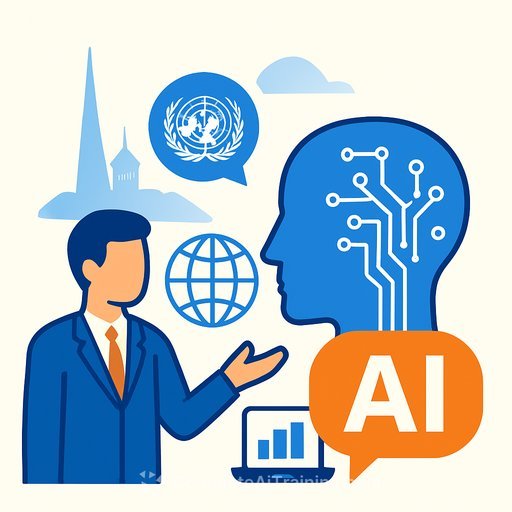
The United Nations has appointed 40 experts to assess how artificial intelligence is reshaping society, marking the first time a global scientific body has been tasked with this work. The Independent International Scientific Panel on AI held its inaugural in-person summit this week, with members formally appointed by the General Assembly in February.
The panel will produce annual evidence-based reports on AI's opportunities, risks, and societal impacts. Its first report is due at the UN Global Dialogue on AI Governance in Geneva on July 6-7.
Human Decision-Making at the Center
The panel's mandate reflects growing concerns about unregulated AI development. UN Secretary-General António Guterres warned in September 2025 that "humanity's fate cannot be left to an algorithm," while the UN High Commissioner for Human Rights cautioned that AI developers building systems without understanding ethical principles risk creating serious harms.
Menna El-Assady, a founding member and assistant professor at ETH Zurich, said the panel is ensuring "humans are central to decision-making" rather than treating AI purely as a mathematical problem. The 40 members represent academia, the private sector, civil society, government, and technical communities, with expertise spanning AI safety, policy, ethics, and infrastructure.
Augmented Intelligence Over Replacement
El-Assady has developed the concept of "augmented intelligence" - using AI to enhance human capabilities rather than replace them. This approach examines what decisions require human expertise and what can be automated, focusing on how humans and AI systems adapt to each other over time.
The panel is examining AI's effects across sectors including labor markets and healthcare. El-Assady is advocating for public digital infrastructure so developers worldwide can access resources, and for AI models that incorporate diverse cultures and languages rather than serving only wealthy nations.
Technical Solutions for Trust
One proposed solution is AI watermarking - making it clear whether content originated from humans or AI systems. This addresses concerns about trust and transparency in the sector.
The panel is not a regulatory body and will not set rules or enforce standards. Instead, it will provide evidence-based analysis to inform policy decisions without prescribing specific approaches.
Researchers interested in this area may benefit from exploring AI Research Courses and Generative AI and LLM Courses to understand the technical and ethical dimensions of AI systems.
Your membership also unlocks: