
AI news ·
UNC Chapel Hill researchers use AI to speed up rare disease diagnosis and expand care access in North Carolina
UNC Chapel Hill researchers are using AI to speed up rare disease diagnoses and bring specialty care to rural clinics statewide. The tools also link medical records with environmental and social data, which account for roughly 80% of health outcomes.
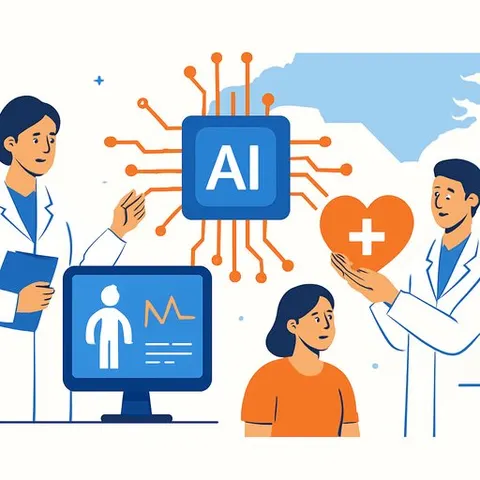
UNC Researchers Deploy AI to Speed Up Rare Disease Diagnoses Across North Carolina
Researchers at UNC Chapel Hill are developing AI tools to diagnose patients faster and integrate medical data that currently remains fragmented across separate systems. The work addresses a specific gap: patients with rare conditions often must travel across the country to find specialists who can identify their illness.
Melissa Haendel, director of precision health and translational informatics at UNC Chapel Hill, said AI is reshaping how doctors approach rare disease diagnosis. "This is really revolutionizing how we think about rare disease diagnostics," she said.
The university plans to bring specialty diagnostics to rural clinics and primary care centers throughout North Carolina, rather than requiring patients to seek care in distant medical centers.
Connecting Disconnected Patient Data
Electronic health records capture only a fraction of the information that affects patient outcomes. Haendel explained that AI can link medical records with environmental data-where patients live, their neighborhood conditions, and other social factors that influence health.
"The electronic health record system that tracks information about your visits to the doctor is a tiny, tiny, tiny portion of the things that are out there about you," Haendel said. Environmental and social variables account for roughly 80 percent of health outcomes, she noted, compared to genetics.
This approach requires AI data analysis capabilities to process multiple data streams and create unified patient profiles for treatment planning.
Broader Applications Beyond Healthcare
The university also discussed how AI applies to risk management and crisis response. Greg Characklis, with UNC's Institute for Risk Management and Insurance Innovation, said AI helps predict and manage disease outbreaks, natural disasters, cyberattacks, and other crises.
The technology integrates data about hazards themselves-floods, hurricanes, cyberattacks-with economic and financial information to help insurers and government officials price risk more accurately. Understanding engineered systems designed to protect against these threats is equally critical, Characklis said.
For more on AI for Healthcare, see related resources.