Unilever and Google Cloud Sign Five-Year AI Partnership to Modernize Marketing and Operations
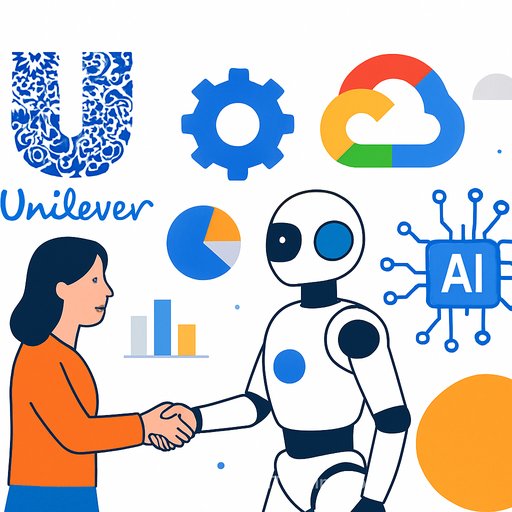
Unilever and Google Cloud have entered a five-year partnership to rewire how the consumer goods giant markets, sells, and runs operations. The plan: shift from static campaigns and siloed systems to agent-led interactions, automated analysis, and an integrated data backbone.
Tara Brady, President for EMEA at Google Cloud, framed the move clearly: "In partnering with Unilever as it boldly reimagines its business processes, we are not just modernizing legacy systems; we are deploying our advanced models, such as Gemini, to create a system of intelligence that reasons, learns, and acts."
Willem Uijen, Chief Supply Chain and Operations Officer at Unilever, put the stakes on the table: "Technology has moved to the core of value creation at Unilever. As brands are increasingly discovered and chosen in environments shaped by AI, we must lead this shift."
Where AI Shows Up in Practice
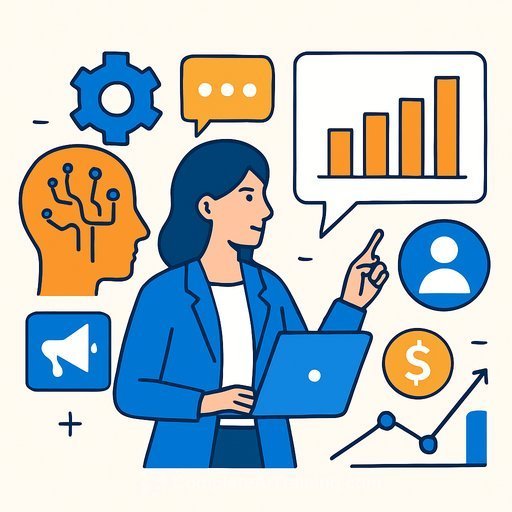
- Agentic Commerce & Marketing Intelligence: Real-time analysis of search, browse, and buy signals to make product discovery easier across search engines, retail media, and conversational interfaces. Multi-step marketing tasks handled by agents, with automated insight generation and faster optimization cycles.
- Integrated Data & Cloud Foundation: A single, secure, cloud-based backbone connecting marketing, supply chain, R&D, and sales. Faster decisions, better governance, and a consistent view of customers, inventory, and performance.
- Advanced AI Across Functions: Use of large models (e.g., Gemini) and Vertex AI for analytics, forecasting, and automation-reducing routine work, improving predictions, and speeding response to demand shifts.
For reference on the tech stack, see Vertex AI and Gemini for Google Cloud.
Agentic Commerce and Marketing Intelligence
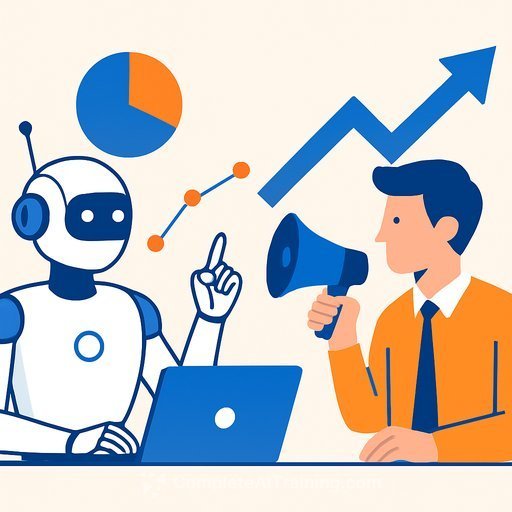
Unilever will use agentic systems to run multi-step workflows-creative iteration, audience selection, budget shifts, and channel mix-without manual back-and-forth. The aim is higher discovery, stronger conversion, and quicker feedback loops.
Expect better signal capture across search, retail platforms, and conversational surfaces. With automated insight generation, teams can act on real patterns-not weekly recaps-tightening the gap between consumer intent and product availability.
An Integrated Data and Cloud Foundation
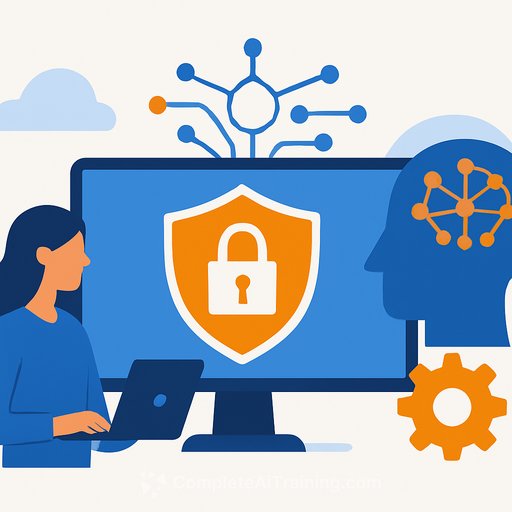
The company will move core apps and its central data environment to Google Cloud, building a unified, AI-first backbone. This reduces friction across teams, improves data security and access, and sets the stage for scaled experimentation.
Think shared taxonomies, a governed feature store, and streaming pipelines that connect media, demand sensing, inventory, and pricing. One truth, many use cases.
Advanced AI Across the Business
Large models and Vertex AI will support demand forecasting, scenario planning, content ops, and automated decisioning. The goal is to create systems that can reason, predict, and act with minimal human intervention-while keeping humans in control of goals and guardrails.
The partnership also includes closer collaboration between Unilever's brand expertise and Google's AI research, so pilots turn into production systems faster.
What Marketing Leaders Can Do Now
- Map the top 5 consumer intents per category and link them to content, product availability, and channel response. Prioritize intent coverage in search, retail media, and chat.
- Stand up agent-led workflows for creative production, audience expansion, and budget pacing with clear constraints (brand voice, compliance, ROAS targets).
- Build a measurement stack that blends MMM, MTA, and incrementality testing. Add "share of search" and "assist rate" for conversational journeys.
- Connect first-party signals (site, CRM, retail media) to a governed feature store. Use audience rules that adapt based on real-time performance.
- Level up team capabilities with focused training: AI for Marketing.
What Operations Leaders Can Do Now
- Prioritize a single data backbone: common IDs, data contracts, and a centralized catalog. Make data discoverable and trustworthy.
- Instrument demand sensing that links search interest, media pressure, and retailer signals to production and logistics planning.
- Set clear governance: privacy by design, approval workflows for agent actions, and human-in-the-loop for high-impact decisions.
- Establish FinOps for AI workloads; track cost per forecast, cost per decision, and model ROI by use case.
- Upskill teams working with Google Cloud AI: Google AI Courses.
First 90 Days: A Practical Plan
- Weeks 1-3: Pick 3 high-leverage use cases (e.g., paid search optimization, retail shelf availability, content ops). Define KPIs and compliance guardrails.
- Weeks 4-6: Connect data sources into a minimal feature store. Stand up a secure sandbox for agents. Pilot automated insights.
- Weeks 7-9: Launch agent workflows with human review. Run A/B and holdout tests. Close the loop with rapid creative and budget shifts.
- Weeks 10-12: Scale winners to additional markets or brands. Document playbooks and handoffs. Prepare a backlog for quarter two.
KPIs to Track
- Marketing: Share of search, conversion rate lift, CAC/ROAS improvement, creative cycle time, incremental revenue.
- Commerce: Product findability, availability rate, retail media ROI, basket attach.
- Operations: Forecast accuracy, stockouts, weeks of supply, cost per decision, time-to-insight.
- Platform: Data freshness SLAs, feature reuse rate, model latency, unit cost per inference.
Risk and Control
- Model drift and bias: Monitor with automated alerts, periodic recalibration, and diverse validation datasets.
- Data privacy and security: Enforce role-based access, data minimization, and regional controls. Log all agent actions.
- Brand safety: Guardrails for tone, claims, and compliance. Human approval for sensitive categories.
- Change fatigue: Phase rollouts, clear SOPs, and visible wins within 6-8 weeks to build momentum.
Why This Matters
AI is moving purchase discovery into chat, search, and retail platforms that reward relevance and speed. The Unilever-Google Cloud partnership shows how to meet that reality: connect data, deploy agents with guardrails, and compress the time from signal to action.
If you lead Marketing or Operations, this is the blueprint: build the backbone, pick the right use cases, and let agents handle the busywork-so your teams can focus on strategy, brand, and growth.
Your membership also unlocks: