
AI news ·
Unions push for AI safeguards in contracts as federal oversight remains absent
Unions are writing AI protections into contracts themselves, filling a gap left by the absence of federal rules. Key demands include limits on AI-driven layoffs, worker privacy rights, and mandatory training before new systems are deployed.
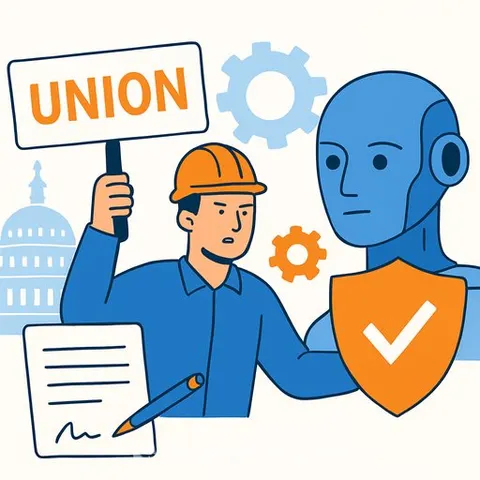
Unions Push for AI Safeguards as Federal Oversight Remains Absent
Labor groups are negotiating AI protections directly into union contracts because the federal government has not established rules governing how employers use the technology. These negotiations focus on job security, worker privacy, and control over the use of employees' names, images, and likenesses.
The Trump administration's proposed AI framework has alarmed union leaders. The plan would allow Congress to overturn state AI regulations and accelerate permitting for data centers-moves unions say could leave workers vulnerable to mass layoffs and unchecked algorithmic decision-making.
Anne Lofaso, a professor at the University of Cincinnati's Donald P. Klekamp College of Law and former National Labor Relations Board attorney, told Bloomberg Law that unions are likely to demand work preservation clauses in future agreements.
These clauses would require companies to train existing workers on new technologies rather than replace them. They could also mandate that employers maintain skilled labor positions as AI systems expand.
What Labor Negotiators Are Seeking
Union contracts are becoming the primary vehicle for establishing guardrails on AI in employment. Specific demands include:
- Restrictions on mass layoffs tied to AI adoption
- Protection of workers' name, image, and likeness rights
- Limits on broad or undefined uses of the technology
- Training requirements before AI implementation
Lofaso said that as AI technology changes, labor groups will continue to expand these protections. The absence of federal standards means contract language has become the default mechanism for establishing worker safeguards.
The Legal Landscape
For legal professionals, this shift reflects a broader challenge: employment law is being written at the bargaining table rather than through legislation. Companies using AI in hiring, performance management, or workforce planning face an inconsistent patchwork of state regulations and union demands.
Legal teams should monitor how union negotiations shape AI policy. Contract provisions negotiated today often influence industry standards and inform future regulatory proposals.
Learn more about AI for Legal professionals and AI for Human Resources to understand how these technologies affect employment practices and compliance obligations.