Unisound Wins RMB 20M+ in Regional Healthcare AI Deals: What It Means for Hospitals and Payers
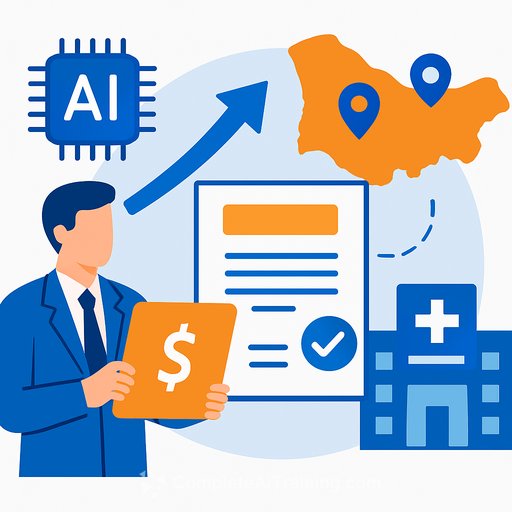
Unisound AI Technology Co., Ltd. (HK:9678) has secured new contracts worth over RMB 20 million with the Jiangsu Healthcare Security Bureau, the Health Commission of Shijiazhuang, and the Health Commission of Jinshui District in Zhengzhou. The deployments center on the company's UniGpt Medical Large Model and related digital healthcare solutions.
This moves Unisound from single-hospital deployments to full-process regional management across payers and providers. Instead of selling standalone apps, the company is delivering core model capabilities that plug into existing workflows and data pipelines-supporting smarter medical insurance oversight, hospital operations, and quality/safety control. Learn more about AI for Operations: AI for Operations.
Why this matters for healthcare leaders
Regional AI models change the unit of value from a single department to the entire ecosystem-payer, provider, and regulator. The goal is straightforward: reduce administrative overhead, improve compliance, and raise clinical quality by making data usable in real time across systems.
For China's medical insurance and healthcare management infrastructure, this aligns with ongoing digital oversight and performance management goals led by national and provincial agencies. For context on policy direction, see the National Healthcare Security Administration's official site: NHSA.
What the UniGpt Medical Large Model could enable
- End-to-end regional management: from claims review and utilization oversight to provider performance and quality/safety tracking.
- Data governance at scale: standardized capture, cleaner records, and better interoperability with hospital information systems.
- Decision support: faster case review, coding assistance, and policy compliance checks where applicable.
- Operational efficiency: fewer manual touchpoints across insurance review, care pathways, and referral management.
About Unisound AI Technology
Unisound is a China-based AI company focused on large-model technologies and full-stack digital solutions for healthcare and medical insurance. Its portfolio spans big data governance and intelligent hospital information systems, with an emphasis on addressing management inefficiencies, enabling collaboration, and improving healthcare quality and safety controls across hospitals and regional systems.
These new regional contracts strengthen its standing as a provider of intelligent healthcare solutions at scale across China.
Implementation priorities for hospitals, payers, and regional health bureaus
- Data readiness: map data sources (HIS, EMR, LIS, PACS, claims), define master data, and set clear data ownership and access policies.
- Integration plan: phase connections to existing systems; start with high-volume, rules-heavy processes (e.g., pre-authorization, claims audit).
- Governance: establish model oversight, versioning, human-in-the-loop checkpoints, and clear escalation paths for exceptions.
- Quality and safety: align use cases with clinical quality metrics and safety controls; measure impact beyond throughput (e.g., appropriateness, adverse events, rework).
- Compliance and security: ensure alignment with regional regulations and internal security standards; audit data minimization and retention.
- Change management: train frontline and back-office teams, publish simple SOPs, and set feedback loops to continuously improve prompts and workflows.
Practical next steps
- Identify two to three high-value pilot scenarios (claims review, referral optimization, discharge summary validation) and define clear KPIs.
- Stand up a joint task force (payer, provider, IT, compliance) to unblock data access and integration issues quickly.
- Run a 60-90 day pilot with weekly metrics reviews; expand only after hitting agreed quality and cost targets.
Market snapshot (for context)
- Average Trading Volume: 121,474
- Technical Sentiment Signal: Strong Sell
- Market Cap: HK$29.78B
This market view does not change the operational upside of well-scoped, well-governed AI rollouts. Treat stock signals and implementation decisions separately.
Upskilling your team
If your organization is planning AI-enabled workflows across payer or provider operations, structured training shortens the learning curve. Explore role-focused training such as the AI Learning Path for Business Unit Managers.
Your membership also unlocks: