
AI news ·
UnitedHealth plans $3 billion AI investment to automate administrative processes and reduce costs
UnitedHealth is investing $3 billion in AI to cut costs and reverse profit declines. The insurer expects the technology to save nearly $1 billion this year.
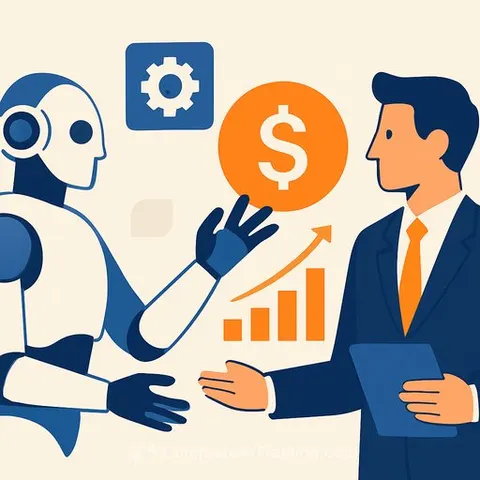
UnitedHealth Group is embedding artificial intelligence across its insurance and health-services operations - from bots that read patient charts aloud to systems that listen to millions of customer calls - as part of a $3 billion investment planned for 2026 and 2027. The push comes after a steep profit decline last year, and executives are counting on AI to cut administrative costs, speed up care approvals, and reverse a year of financial damage.
How UnitedHealth is deploying AI today
AI is already handling tasks that have long relied on paper, faxes and phone calls. Optum Real, a real-time coverage-checking system, lets providers see instantly whether a service is covered and has processed roughly a billion transactions since going live last year. Nurses driving to home visits hear AI-generated summaries of medical charts, while algorithms analyze millions of recorded customer calls to identify the root causes of complaints. One pilot program even uses AI agents to call doctors' offices and schedule patient appointments.
The company runs more than a thousand AI applications, employs 20,000 AI engineers, and gives staff access to 117 large language models. For healthcare professionals, the growing presence of AI for Healthcare means understanding how automation drives scheduling, coverage checks, and prior authorization workflows is no longer optional. Sandeep Dadlani, chief executive of UnitedHealth's Optum Insight division, said the technology has become an imperative across business lines: "The CEOs lead it."
The $3 billion efficiency play
UnitedHealth expects to reduce operating costs by nearly $1 billion this year, largely driven by AI. The $3 billion, two-year investment is generating a 2-to-1 return, according to executives, as systems automate cumbersome manual processes and make workers more efficient. Insurers and medical providers together spend $80 billion annually on administrative transactions, Morgan Stanley analysts noted in a research note, calling the cost-savings potential "clear, particularly for manual, data-intensive processes such as prior authorization."
Wall Street is bullish on the numbers. UnitedHealth shares have climbed 21 percent this year after losing more than a third of their value in 2025. Executives are signaling that selling AI products and services to other healthcare companies will add another revenue stream beyond internal savings.
Winning trust in a skeptical public
Health insurers face a steep climb in convincing consumers that AI will ease their frustrations rather than add to them. A Gallup survey found 69 percent of respondents had little or no trust in businesses to use AI responsibly. About half of insured Americans have encountered barriers to care such as delays and denials, according to a KFF poll. Prior authorization remains a flashpoint, and UnitedHealth is already defending itself in class-action cases that claim it relied on an algorithm to limit post-acute care admissions.
A federal inspector general report found that plans using an algorithm from UnitedHealth's naviHealth subsidiary had higher denial rates, and those denials were almost always overturned when patients appealed. The company said the algorithm does not dictate length of stay and is used in line with regulators' guidance. Tim Noel, who succeeded the slain insurance chief Brian Thompson, said, "You have to gain trust, earn trust through your actions. It will take some time for that to actually be felt by people."
Where AI stops: no diagnosis, strict guardrails
An internal review board that includes medical ethicists, clinicians, technologists, and privacy and legal experts approves new AI uses. Nearly 99 percent of UnitedHealth's AI applications are administrative, not clinical. "We are not getting into diagnostic AI," Dadlani said. The company has occasionally pulled back an AI model after detecting unintended behavior. "We have all our alerts firing if something's beginning to drift," he added.
Dadlani also drew a hard line on AI's role in coverage decisions: "We only approve using AI. We never deny using AI." That framing is part of a wider effort to shift perceptions. UnitedHealth recently invited reporters to its Minneapolis-area headquarters to showcase AI work, a rare event for a company that historically limited press access.
Why this matters for Healthcare professionals
For clinicians, administrators and health-system leaders, UnitedHealth's heavy AI spending signals a near-term shift in how prior authorization, scheduling and coverage checks will function. When an insurer processes a billion real-time eligibility transactions with an automated tool, front-office workflows change. When payers use call analytics to spot patient friction points, care navigation and appeals processes may evolve. Understanding which AI systems are in play, what guardrails exist, and how denials are reviewed becomes part of the job - whether you work in a practice, a hospital, or a health plan.