How UnitedHealthcare is actually using AI to cut friction in health insurance
UnitedHealthcare is pushing AI where it matters: fewer hoops for members, faster answers for advocates, and cleaner back-office work. Craig Kurtzweil, chief data and analytics officer for the company's commercial business, outlined how they're doing it with a focus on responsible deployment and measurable outcomes.
Member-facing tools that reduce effort
The Claims Assistant AI tool trims out-of-network claim submissions from 12-15 minutes down to about three minutes by auto-filling medical fields with prompt engineering. That's the kind of time savings members feel immediately.
Care navigation is getting sharper too. In the first quarter of 2025, members completed 18 million AI-enabled provider searches. "Members Like You," a newer guidance tool, has recorded more than 40,000 interactions so far.
Surest: AI-informed plan design drives lower costs
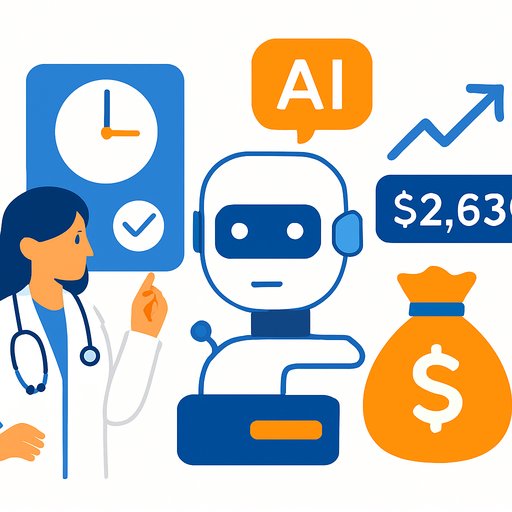
Within the Surest health plan, AI has been in the mix for years to guide smarter choices. Multi-year data show members who shopped for care saved an average of $2,631 per encounter for select surgeries like hernia repair and gallbladder procedures.
Scaling AI across the enterprise
Across UnitedHealth Group, there are more than 1,000 AI use cases in production, many in the commercial book. That includes trend detection to inform employer benefit strategies and tools that help advocates resolve benefit and coverage questions faster.
On the front line, Conversational AI for Voice answers common benefit and coverage questions or routes members to a live agent. Last year, 65 million calls were initially handled by an AI chatbot, speeding up time to resolution and improving accuracy for routine needs.
Inside the advocate experience: AI that removes busywork
- Welcome experience: Surfaces key member history from claims or prior calls before the advocate picks up, streamlining authentication and personalization.
- In-call assist: Uses voice analytics to understand intent, then pulls relevant benefits, coverage, and cost details from the member's plan in real time.
- In-call summarization: Auto-summarizes the conversation so the next advocate doesn't need to reconstruct call history.
Back-office efficiency with generative AI
Beyond member interactions, generative AI is taking on internal tasks. "Alfred," recently rolled out, helps reduce time spent on administrative work such as goal setting and feedback, freeing leaders and teams to focus on higher-value work.
What insurance leaders can take from this
- Start with high-friction journeys (claims submission, provider search, common calls) where outcomes are measurable in minutes saved and errors reduced.
- Blend AI with advocates, not instead of them. Real-time assist and call summaries shift effort away from admin and toward member support.
- Use multi-year data to prove value (e.g., per-encounter savings) and reinforce plan design decisions.
- Build for safety and clarity: govern data, monitor drift, and explain decisions in plain language. Frameworks like the NIST AI Risk Management Framework can help set guardrails.
Bottom line
This isn't about flashy tech. It's about shaving minutes off tasks, guiding members to better choices, and giving teams cleaner tools. Do that consistently, and the savings show up in both experience and cost.
Build your team's AI fluency
If you're planning similar projects and need practical upskilling paths for operations, analytics, or customer service teams, browse these role-based options: AI courses by job.
Your membership also unlocks: