
AI news ·
Universal's Udio AI deal sparks MAC push for artist consent, fair pay, and transparency
Universal's deal with Udio moves AI music into the mainstream, but artists want clear say and fair pay. MAC is pushing for consent, transparency, and a real kill switch.
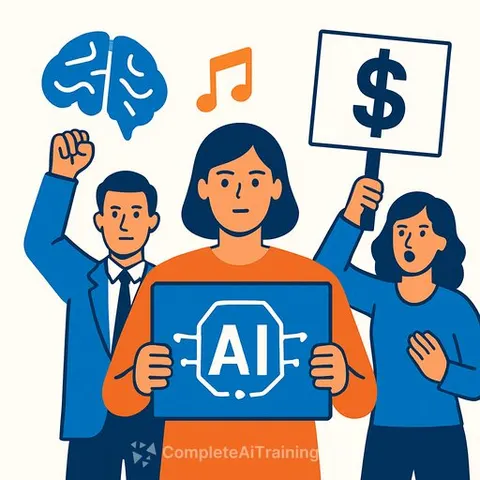
Universal-Udio: What This AI Deal Means For Artists, Producers, and Songwriters
Universal Music settled its lawsuit with AI company Udio and agreed a licensing deal for a new version of the platform launching next year. That's the headline. The real story for creatives: who controls usage, who gets paid, and who decides the rules day to day.
The Music Artists Coalition (MAC) is pressing for clear answers before this becomes business as usual. The message is simple: artists need control, compensation, and visibility-up front, not after the fact.
What MAC Is Asking For
- Artist consent: Creators should decide if and how their work trains AI models or powers AI features.
- Fair compensation: Revenue splits must reflect the value of the underlying catalog and the artist's voice/likeness.
- Deal and data clarity: Artists need to see the terms, how their work is used, and how money flows.
What We Know (And Don't) About the Universal-Udio Setup
Universal's leadership has said they'll seek explicit consent when an artist's voice is imitated or when AI reworks/mashes existing songs. Udio's CEO has talked about opt-in. That's encouraging on the surface.
But details are thin. How does opt-in work in practice? What are the default settings? How are multi-writer or multi-artist tracks handled? Was settlement money paid for past training, and if so, how will it be distributed?
The Big Open Questions
- Will labels and publishers obtain explicit consent before allowing training or voice modeling per artist and per work?
- How will settlement funds (if any) be allocated to affected artists and songwriters?
- What's the mechanism to approve, deny, or limit specific uses (training vs. style transfer vs. voice cloning vs. mashups)?
- How are disagreements handled when multiple writers/performers on a track don't align on participation?
- What percentage of revenue goes to artists versus the label/publisher? Are there minimum guarantees?
- What reporting will artists receive (usage logs, model interactions, track-level economics)?
- How fast can an artist revoke consent, and what happens to already-trained models and cached data?
Action Steps For Creatives Right Now
- Audit your contracts: Identify who controls AI training, voice/likeness, remixes, and derivative uses. Flag silent or vague clauses.
- Set your defaults: Decide your stance on training, voice cloning, stems access, and AI-assisted remixes. Opt-out should be explicit if that's your preference.
- Create a consent framework: Define approval flows per work, per use case, and per partner. Specify who on your team can sign off.
- Align your collaborators: Get written alignment with co-writers, producers, and featured artists on AI participation and splits to avoid gridlock.
- Price the value: Establish a rate card or floor terms for training, voice models, and reworks. Include minimums and usage caps.
- Demand transparency: Require dashboards or monthly reports showing what was used, how, and what it earned-plus audit rights.
- Protect your voice and name: Specify what's allowed (tone-matching vs. full cloning), where it can appear, attribution rules, and mandatory labels for AI-assisted or synthetic vocals.
- Kill switch: Ensure fast takedown and consent revocation, with obligations to purge training data where possible.
- Indemnity & safety: Include guardrails against deepfakes, misleading content, and brand-harming use. Make the platform share liability.
- Metadata & tracking: Require ISRC/ISWC mapping, watermarking/fingerprinting, and unique IDs for AI uses to track royalties.
If You Choose To Opt In, Minimum Terms To Push For
- Explicit, granular consent: Separate approvals for training, voice cloning, style transfer, remixes, and commercial outputs.
- Clear economics: Per-use fees or revenue shares, minimum guarantees, and defined splits for training vs. generated outputs.
- Usage limits: Territory, media types, categories (no political or sensitive uses), and time-bounded rights.
- Attribution and labeling: Visible disclosure when AI is involved; credit conventions you approve.
- Data controls: No resale or secondary use of your data without new consent; data minimization by default.
- Revocation and purge: A contractual path to withdraw consent and remove materials from active models where feasible.
- Reporting and audits: Monthly usage logs, revenue detail, and third-party audit rights.
For Indie Artists and Small Labels
- Check distributor policies: Some aggregators already have AI terms. Confirm your default is opt-out unless you say otherwise.
- Use simple templates: One-page addendums can cover consent, revenue, reporting, and safety. Keep it plain and enforceable.
- Centralize decisions: Nominate a single point of contact (manager or counsel) for all AI approvals to avoid mixed signals.
Why This Matters
AI deals are being inked now. The terms set today will dictate how your catalog, voice, and creative identity show up in future tools-and how you're paid for it. If you don't define the rules, someone else will.
Helpful Resources
Skill Up (Optional)
- AI courses by job - get fluent so you can negotiate from strength
- Popular AI tools - evaluate what's out there before you opt in
Bottom line: insist on consent, compensation, and clarity. Put it in writing, keep your collaborators aligned, and don't be rushed into a "partnership" that treats your work as raw material without proper control and pay.