Universities Face a Fundamental Conflict: How Fast Should They Adopt AI?
Universities operate on institutional time. Committees meet on schedules. Academic standards take years to establish. Credibility depends on consistency across student cohorts. But AI changes in months. Norms shift in weeks. Expectations reset in days.
This is not a minor timing problem. It is a structural tension that forces institutions to confront what they are willing to trade for relevance, and what they refuse to sacrifice under pressure.
The Cost of Moving Too Slowly
When universities hesitate, AI use does not stop. It goes unofficial. Teaching teams improvise with tools on their own. Students develop parallel norms outside institutional oversight. The university remains the credentialing authority, but it loses the power to set the rules collectively.
The institution drifts into a state where what it says and what actually happens in classrooms no longer align.
The Cost of Moving Too Fast
Speed driven by urgency produces different failures. Decisions get made for convenience rather than legitimacy. Policy becomes reactive. Implementation becomes inconsistent. Equity becomes accidental.
In universities, that matters more than in most organisations. These institutions grade students, select candidates for advancement, and award credentials that shape careers. Speed without adequate scrutiny becomes a way of exercising power that no one fully examines. The reputational and moral cost is high.
Three Possible Futures
The compliance university responds by thickening layers of policy and detection. This produces visible activity and institutional reassurance. But it also creates a gap between formal rules and lived behaviour. Students and staff adapt to AI tools off-platform while governance tries to catch up in public.
The platform university adopts rapidly and procures at vendor speed. It can generate genuine innovation. It can also create whiplash. Departments develop uneven practices. Cohorts face unclear standards. Educational norms get set by tool capability rather than academic judgment. When backlash arrives, it tends to be moral: concerns about surveillance, workload, fairness, and the quiet reshaping of how students are assessed and how academic labour is organised.
The split-tempo university runs different speeds simultaneously. Some departments experiment and iterate. Others hold standards and consistency. This can look pragmatic. It can also look like institutional fragmentation, where one culture speaks the language of agility and another speaks the language of protection, each viewing the other as the obstacle.
What Speed Actually Means
Speed is not neutral. Moving quickly tends to benefit staff with lighter workloads, students with stronger digital skills, and departments with more resources. Moving slowly tends to protect those already empowered by existing processes and hierarchies.
Neither approach is inherently fair. The tempo question is therefore also a question about who gains and who loses.
A Design Choice, Not a Reaction
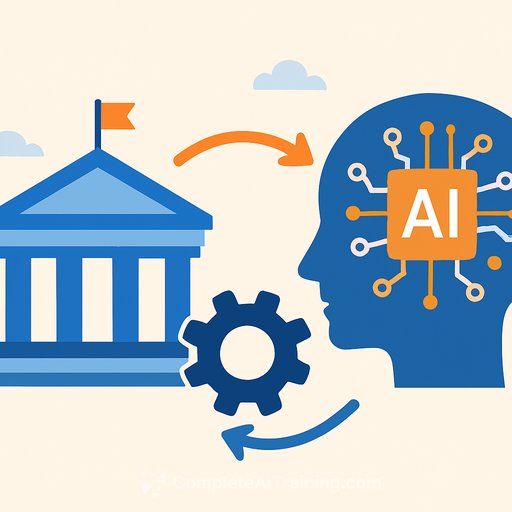
Some newer institutions have built AI into their operating system from the start. They use AI as a lens for curriculum and assessment rather than retrofitting tools into inherited structures. That does not eliminate the tension between speed and trust. It shifts the question from "How do we catch up?" to "What institutional tempo do we design?"
Most universities do not have that choice. The operating system already exists. The question becomes whether AI requires patching it, replacing it, or learning to run both in parallel.
The Harder Recognition
Universities may discover that the hardest part is not choosing between speed and caution. It is learning to hold both under pressure simultaneously.
AI will not wait for committee schedules. Universities cannot afford to abandon legitimacy, standards, and trust. These two demands do not resolve into a single answer. They have to be held together.
That is the tempo question universities now face: How to move fast enough to remain relevant, without moving so carelessly that they cease to be trustworthy.
For more on how institutions and educators are navigating this challenge, see AI for Education and the AI Learning Path for Teachers.
Your membership also unlocks: