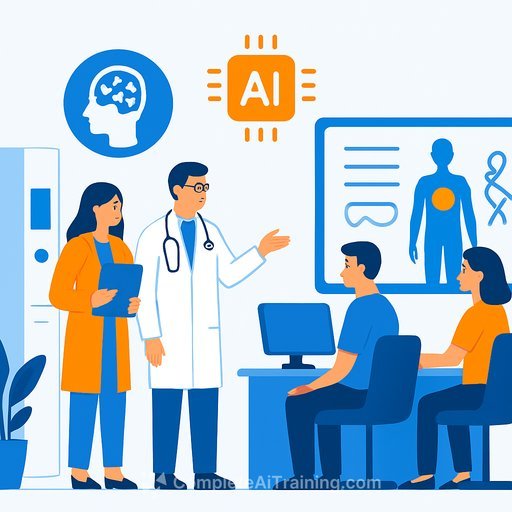
AI-enabled clinic at GIMS Greater Noida targets earlier detection of cancer, heart disease, and organ disorders
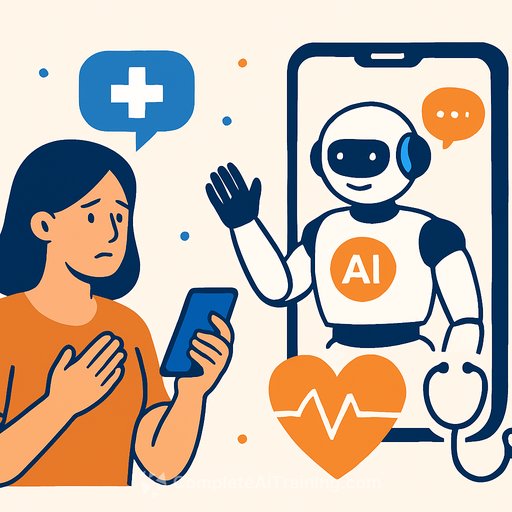
Greater Noida's Government Institute of Medical Sciences (GIMS), Kasna, has opened an artificial intelligence-powered clinic inside its public hospital. The service is built to surface risks for cancer, cardiovascular disease, kidney and liver disorders earlier in the patient journey, when intervention is most effective and less costly.
The clinic is the first of its kind in Uttar Pradesh's public system. It signals a practical shift: using AI and genetic screening alongside routine diagnostics to support faster, more accurate decisions for high-burden conditions.
What this means for patients and providers
For patients relying on government facilities, this could reduce time to diagnosis and escalation to specialty care. For clinicians, it promises earlier risk stratification and fewer blind spots in complex cases.
- Earlier flags from routine inputs: CBC, chemistries, imaging, vitals, and history.
- Decision support for triage, referrals, and initiating guideline-based care sooner.
- Potential to curb late-stage presentations that drive cost and worsen outcomes.
How the AI clinic works
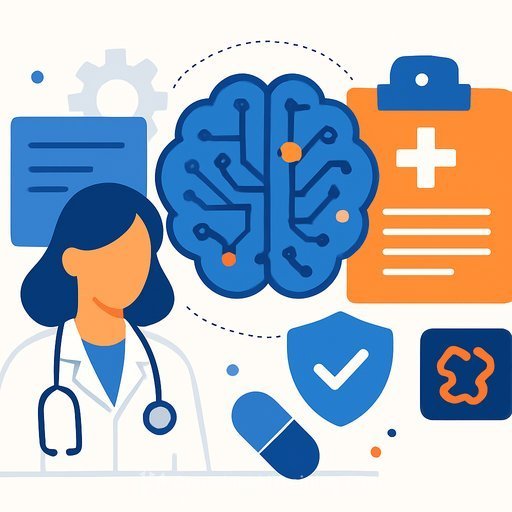
According to GIMS Director Brigadier Dr Rakesh Gupta, the clinic blends AI with genetic analysis to interpret blood reports, X-rays, ultrasounds, CT, MRI, and related investigations. The system surfaces patterns that merit attention and pushes them to the treating team for review.
- AI assists in rapid reads and risk scores; clinicians retain final judgment.
- Models also track disease trajectory and recovery patterns to personalize follow-up plans.
- Outputs integrate into existing workflows instead of adding new bottlenecks.
Why now
Teams behind the project cite a clear trend: younger patients presenting with advanced cancer, cardiovascular disease, kidney and liver pathology, and hypertension. Delays in diagnosis-often driven by limited access to specialty testing-are a recurring factor.
Bringing AI-supported diagnostics into a government hospital aims to close that gap and spread access more evenly. It's about moving work upstream, not adding another layer of tests.
Inauguration and stakeholder interest
The clinic was inaugurated virtually by the Additional Director General of Health Services (ADGHS), Government of India. More than 100 clinicians, researchers, and health tech experts from India and abroad joined the launch, pointing to strong interest in scalable AI solutions for public health; see Research for related AI validation and healthcare research.
Practical takeaways for healthcare teams
- Define clear referral criteria: who gets routed to the AI clinic and when.
- Focus on input quality: standardized lab panels, consistent imaging protocols, clean metadata.
- Set guardrails: documented clinical oversight, second reads for high-risk outputs, and clear escalation paths.
- Consent and transparency: explain how data is used, what AI does and doesn't do, and how results impact care.
- Bias and performance monitoring: audit outputs by age, sex, comorbidity, and socioeconomic status; track false positives/negatives.
- Safety net workflows: define actions for low confidence scores, model downtime, and off-hours coverage.
- Training: brief clinicians, nurses, and technicians on interpreting AI reports and documenting decisions.
Data, ethics, and integration
AI should augment-not replace-clinical judgment. Maintain human-in-the-loop reviews for all high-stakes calls, and log decisions for quality improvement.
For policy alignment and digital health integration, see India's health data and interoperability efforts under ABDM by the National Health Authority. Guidance on early cancer detection principles is also useful when aligning triage protocols.
What to watch next
- Prospective validation results and real-world reductions in time to diagnosis.
- Impact on stage at presentation for oncology and ACS admissions.
- Integration with district hospitals and telemedicine networks for wider reach.
Bottom line: earlier signals, smarter triage, and tighter follow-up loops can change outcomes. The GIMS clinic is a concrete step toward that goal in public care-now the work is proving impact and scaling responsibly.
Your membership also unlocks: