
AI news ·
U.S. copyright law still requires human authorship even when AI helps create a work
Copyright protection requires human authorship - AI alone can't hold it. Writers who direct, edit, and shape AI-generated work can still claim ownership under U.S. Copyright Office guidance.
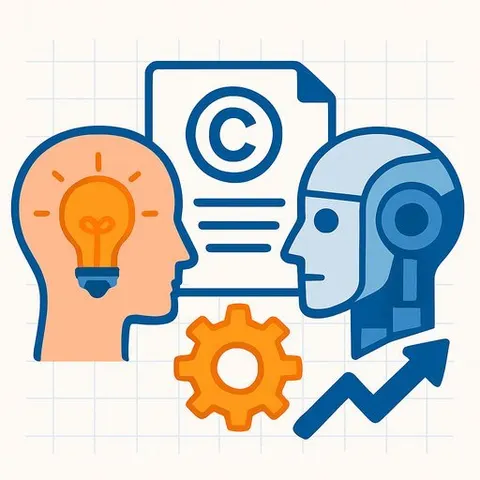
Who Owns the Words When AI Helps Write Them?
World Book and Copyright Day falls on April 23rd each year. This year, the question of authorship in an AI-assisted world has moved from academic debate to practical necessity for writers.
The U.S. Copyright Office has issued clear guidance: human authorship remains essential for copyright protection. AI is a tool. The person using it is what matters.
What counts as human authorship
The distinction isn't whether AI was used. It's how much creative control a writer exercised over the final work.
Human contributions that demonstrate authorship include:
- Prompting and directing the AI output
- Editing and rewriting generated text
- Organizing and selecting material
- Fact-checking and verification
- Adding original ideas and analysis
These decisions mirror traditional writing work. When a writer shapes a piece through these choices, they demonstrate the creative selection and modification that copyright law recognizes.
The line between tool and author
Material generated entirely by AI with minimal human input faces clear copyright limits. The copyright office doesn't protect work that lacks meaningful human creative contribution.
This distinction matters for writers using AI tools. Your role as editor, curator, and decision-maker is what establishes your authorship. Prompt engineering-the skill of directing AI to produce what you need-counts as creative work.
Attribution still matters
World Book and Copyright Day reminds the writing profession that crediting creators remains essential, even as tools change how work gets made. Authorship and attribution are not formalities. They're how the industry recognizes who did the creative work.
Note: This article is for informational purposes only and is not legal advice. For specific questions about copyright and AI, consult the U.S. Copyright Office.