
AI news ·
U.S. courts split on whether AI chatbot conversations are protected as legal secrets
Two U.S. courts issued conflicting rulings on whether AI chat logs are privileged, leaving professionals without clear guidance. A New York court denied protection for 31 Claude-generated documents, while a Michigan court shielded ChatGPT inputs in another case.
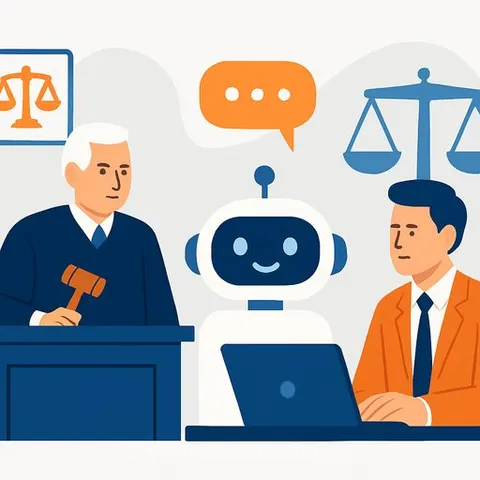
Two recent U.S. court rulings have exposed a widening gap in how the legal system treats AI-generated documents, leaving professionals with no clear answer on whether their conversations with chatbots are protected from disclosure.
In February, the U.S. District Court for the Southern District of New York ruled that 31 documents created by Bradley Hefner, former CEO of financial services firm Benificent, using the AI chatbot Claude could not be considered confidential. Hefner, charged with securities fraud and wire fraud, had input his defense strategy into Claude to generate the documents and delivered them to his attorneys.
The court rejected Hefner's argument that the materials were litigation preparation materials, stating, "Since Claude is not a lawyer, the 'attorney-client privilege' cannot apply." It also ruled the documents were created without attorneys' instructions, so they could not be protected under litigation preparation privileges.
Two courts, two different answers
That same month, the Michigan federal court reached the opposite conclusion in a different case. Sohyun Warner, a Korean-American woman suing her former employer for racial discrimination, used ChatGPT to prepare court documents while proceeding without a lawyer.
The opposing side demanded all questions and answers Warner input into ChatGPT, arguing the need to verify whether she leaked company materials marked as "confidential." The court rejected the demand, ruling, "ChatGPT is not an independent third party but a 'tool' to assist in document creation," and protected the materials under the litigation preparation principle.
The rulings highlight a central tension: attorney-client privilege protects communications between lawyers and clients, but AI chatbots sit outside that framework. When a user inputs sensitive information into Claude - needing varying legal tests and no consensus across jurisdictions - the protection gap for AI for legal work remains unresolved.
The disclosure risk in civil litigation
U.S. legal circles are voicing difficulties in applying uniform standards to whether AI-generated materials should be submitted in court. The issue lies in users' tendency to input sensitive information into AI chatbots without hesitation, including in civil litigation where privilege protections are less clear.
A high-ranking domestic legal official commented, "Unlike professionals legally obligated to maintain confidentiality, conversations with AI chatbots cannot be guaranteed the same level of protection in reality."
Why this matters for legal professionals
For lawyers and in-house counsel, this is no longer hypothetical. Litigators who input case strategies into AI chatbots risk having those conversations pried open in discovery, and a judge will decide whether the input is for legal protection based on the specific facts - not a uniform rule.
If your client entities are preparing documents with AI tools, the practical takeaway is to understand what data protected documents may be legally, or to route AI-generated work through attorney review from the start, or avoid putting privileged information into chatbots entirely.