VA deploys AI system across 150 medical centers to cut administrative delays
The Veterans Health Administration rolled out an artificial intelligence operating system across more than 150 medical centers and outpatient facilities, integrating with Slack to connect 370,000 clinicians, administrators, and caregivers. The system automatically flags operational problems-long wait times, poor patient satisfaction-assembles relevant staff into dedicated channels, and surfaces the data they need to act.
Josh Geiger, senior advisor to the VHA chief operating officer, said the system "enables us to cut costs, create efficiencies and focus more time and energy on front-line veteran care."
The deployment represents one of the largest healthcare modernization efforts in recent years. For hospital networks and clinics, it demonstrates how AI agents and automation can reduce operational silos and accelerate decision-making across departments.
VA expands virtual reality therapy to 45 medical centers
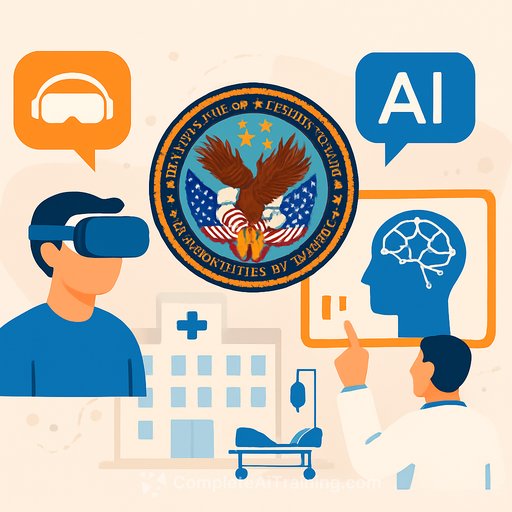
The VA is scaling prescriptive VR therapies through Mynd Immersive to treat chronic pain, anxiety, and stress at home. Clinical studies in Pennsylvania and Mississippi showed a 46.7% reduction in pain intensity, a 37.39% reduction in anxiety, and a 34.52% decrease in distress.
The programs include neuroscience-based pain management, breathing exercises, and immersive experiences designed for veterans. Chris Brickler, Mynd's CEO and cofounder, said the platform gives "doctors and clinicians a powerful new digital tool that is highly effective and scalable."
Healthcare systems can adapt this model to integrate digital therapeutics into routine care without requiring patients to travel to facilities.
Scheduling system connects community providers
The VA's Enterprise Scheduling System now links 27,000 community care providers, allowing staff to book up to 25 appointments per day. VA Secretary Doug Collins said the system helps veterans "choose the healthcare that's best for them, whether at a VA facility or a community provider."
The faster booking process reduces gaps between referral and care, a persistent problem in large healthcare networks managing both internal and external providers.
Healthcare systems nationwide may look to similar operational solutions-and potential outsourcing partnerships-to reduce administrative burden and improve patient experience. Learn more about AI for healthcare applications.
Your membership also unlocks: