Universities roll out standalone AI degrees as hiring pressure mounts
US universities are formalising artificial intelligence as an undergraduate major at an accelerating pace. Northwestern University will launch its standalone AI degree in fall 2026, joining a growing roster of institutions that have shifted AI from a specialisation into a core academic discipline.
The move reflects structural change in higher education. Universities are not simply adding AI courses to existing programmes-they are reorganising departments and redrawing curriculum priorities to match labour market demand.
What's in the curriculum
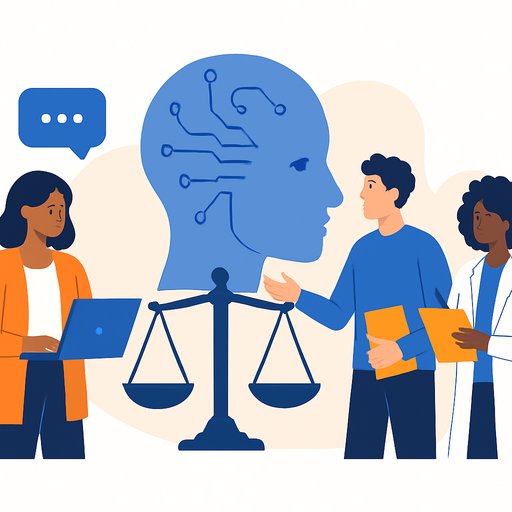
Northwestern's programme combines machine learning, natural language processing, algorithms, and AI infrastructure with mandatory coursework on societal implications. Students examine privacy risks, sustainability concerns, and intellectual property conflicts alongside technical training.
This dual focus-technical depth plus ethical scrutiny-has become standard at major institutions. Universities are training operators who understand both system architecture and consequences, not just coders.
The expansion timeline
Carnegie Mellon University launched the first undergraduate AI degree in 2018. That early programme has since triggered system-wide expansion across tiers of higher education.
MIT, University of Pennsylvania, and USC embedded AI into undergraduate offerings. Public institutions including UC San Diego and University of South Florida scaled similar programmes. Drexel University and Florida International University integrated AI with data science and machine learning tracks aligned to industry deployment.
Purdue University launched separate BA and BS degrees in AI-one focused on ethics and policy, the other on technical engineering-reflecting that AI is no longer a single-track field.
Why the acceleration
Employers across finance, healthcare, technology, and public administration now expect graduates to have practical AI knowledge. Universities, historically slow to revise curricula, have compressed timelines to remain competitive.
There is also a signalling effect. Institutions without prominent AI programmes risk appearing outdated in a technology-driven economy.
Unresolved tensions
Curriculum relevance poses a real problem. AI tools and frameworks change every few months, not years. Universities struggle to keep pace.
Teaching ethics remains unproven in practice. When profit drives deployment decisions, classroom instruction may not translate into accountability in the field.
Universities face a deeper institutional challenge: balancing industry alignment with academic freedom. Without careful design, AI programmes risk becoming corporate talent pipelines rather than spaces for critical inquiry.
What matters now
Enrolment numbers are not the measure. Success depends on whether graduates can critically interrogate the systems they build, not merely optimise them.
The race is no longer about adoption. It is about whether higher education can credibly teach students to understand a technology it is still learning itself.
For education professionals, this shift demands attention to curriculum design and faculty development. Consider exploring Generative AI and LLM Courses to understand the technical foundations shaping these programmes, or review AI for Education resources tailored to your sector.
Your membership also unlocks: