Report Urges Action on AI in Schools to Avert Cognitive Atrophy
The Australian Network for Quality Digital Education has issued a clear warning: without strong guidance, AI use in classrooms could weaken the very cognitive muscles students need to learn well. The call is simple-adopt national standards fast, design school-ready AI that supports learning, and equip teachers to lead.
What the report says
The report argues AI can deepen learning-if we use it with purpose. Students should offload routine tasks to AI while actively building self-regulated learning, retrieval skills, and critical thinking. That balance is the difference between stronger thinkers and students who become dependent on a tool.
The core risk: cognitive offloading gone wrong
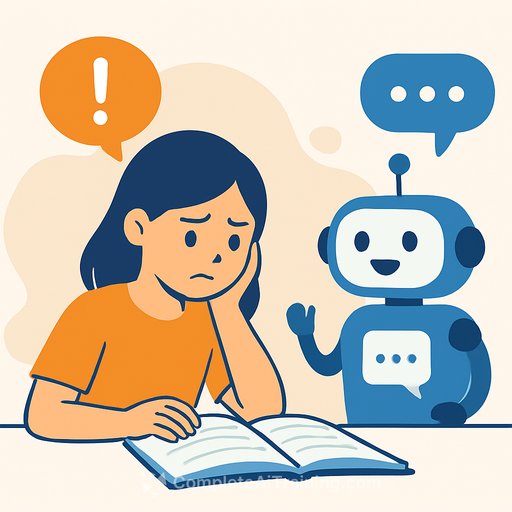
AI makes it easy to skip struggle. That's the danger for school-age learners who are still building knowledge stores and "thinking infrastructure." Over-reliance on AI risks shallow understanding, weak recall, and a growing divide between students who can reason and those who can't.
AI also makes mistakes and hallucinates. If students don't have enough background knowledge, they can't spot errors. That's a recipe for confusion and misplaced confidence.
Two leverage points that matter
- Tool design for learning: Classroom AI should prompt thinking, scaffold strategy, and strengthen foundational knowledge-not just produce answers.
- Teacher guidance and support: Clear strategies, routines, and resources so teachers can help students extend their thinking with AI instead of outsourcing it.
What school leaders can do now
- Adopt a simple AI use policy: Define "offloadable" tasks (grammar checks, idea starters, low-level summaries) and "do-not-offload" tasks (core content retrieval, worked examples, first passes at problem-solving).
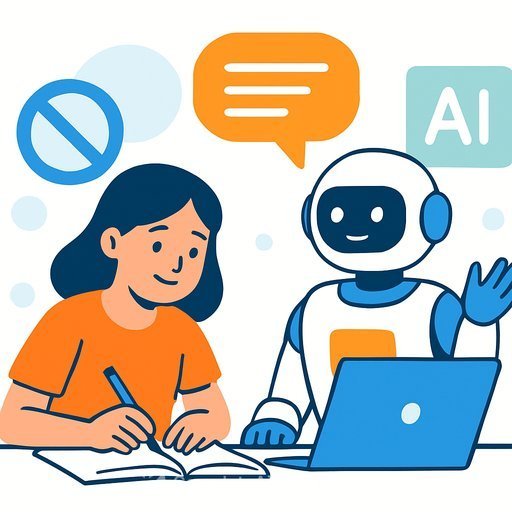
- Set classroom norms: AI is a draft partner, not a final answer. Require students to show their thinking before and after AI use.
- Protect assessments: Favor in-class, oral, or performance tasks; use process portfolios and version histories; weight reasoning and evidence over final output.
- Invest in teacher capability: Provide planning time, micro-PD, and coaching on AI-enabled pedagogy and assessment design.
Classroom routines that keep thinking central
- AI-last, not first: Students outline or attempt a problem before consulting AI; they annotate how AI feedback changed their work.
- Retrieval, then refine: Students recall core concepts from memory, then use AI to compare, extend, or contradict-with citations.
- Error-spotting drills: Feed AI-generated responses back to students; they fact-check, correct, and explain why.
- Source triangulation: Require verification from at least two credible sources when AI introduces new claims.
A quick tool design checklist
- Prompts metacognition: "Explain your steps," "Show prior knowledge," "Where could this be wrong?"
- Supports spaced retrieval and interleaving, not just summarization.
- Offers explainable outputs, citations, and easy fact-check paths.
- Allows teachers to set constraints (no full solutions, scaffolded hints first).
- Protects student data and provides transparent logs for review.
Guidance for teachers
- Plan the task flow: Human attempt → AI feedback → human revision → citation and reflection.
- Teach prompts that demand thinking: Compare perspectives, generate counterexamples, justify reasoning, predict errors.
- Make learning visible: Students submit notes, drafts, and critiques-not just polished outputs.
- Close the loop: Revisit prior work to check durable learning (weeks later) with short retrieval checks.
Policy moves that matter
- Adopt national standards quickly: Provide clarity on safe, educationally sound tools and classroom use.
- Fund teacher development: Evidence-based resources, school-based coaching, and time to redesign tasks and assessments.
- Back research: Study cognitive offloading effects, long-term retention, and equity impacts to refine guidelines.
Equity and access
- Ensure all students have guided practice with AI-supervised, structured, and aligned to curriculum.
- Prioritize tools that work on low-spec devices and protect privacy.
- Monitor gaps: who is over-offloading, who is building durable knowledge, and who needs intervention.
How to measure what matters
- Track retention with delayed quizzes and transfer tasks.
- Analyze the quality of student reasoning, not just final grades.
- Review AI logs for over-reliance and missed verification steps.
- Run small trials, compare cohorts, and scale what works.
Bottom line
AI can deepen learning or hollow it out. The difference is standards, tool design, and teacher-led pedagogy that protects thinking. Move fast, keep cognition at the center, and make every AI interaction an opportunity to learn-not a shortcut to forget.
Helpful resources
Your membership also unlocks: