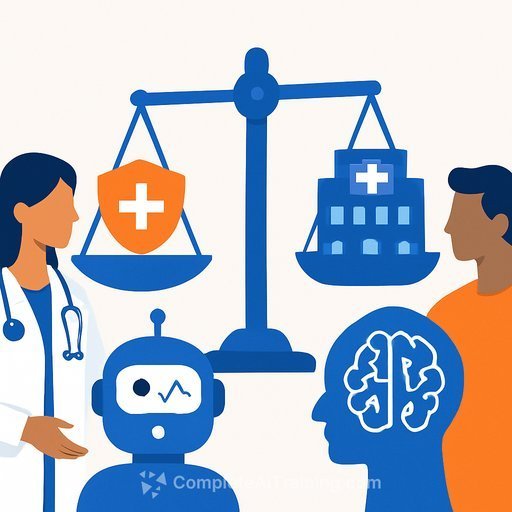
Utah's AI Sandbox Offers a Blueprint for Healthcare Regulation
Utah has spent two years testing a different approach to healthcare AI oversight. Since 2024, the state has run a regulatory sandbox through its Office of Artificial Intelligence Policy - a controlled environment where companies can test AI systems under relaxed rules but with close government supervision.
The model is gaining attention from policy experts. The Center for Data Innovation, a Washington-based think tank, published an analysis in March highlighting why Utah's approach works better than outright bans.
How the Sandbox Works
Rather than restricting AI upfront, the sandbox lets regulators evaluate how tools perform in real clinical settings. This produces evidence-based rules instead of rules built on assumptions about what might go wrong.
Hodan Omaar, a senior policy manager at the Center for Data Innovation, identified four concrete advantages.
Beneficial Tools Actually Reach Patients
Broad restrictions block good AI alongside bad AI. A state ban on AI-assisted treatment decisions would prevent clinicians from using both poorly validated chatbots and rigorously tested clinical decision support tools.
Utah's sandbox creates a path for companies to demonstrate their tools under real conditions. Promising solutions get a chance to prove themselves instead of being swept up in categorical prohibitions written before anyone tested them.
Regulators Learn Before Writing Rules
Experience makes it easier to write regulations that target actual failure points rather than imagined ones. Regulators can identify where AI introduces genuine clinical risk and where it doesn't.
A workflow like prescription renewals doesn't need to be treated as entirely safe or entirely dangerous. The sandbox reveals which steps meaningfully protect patient safety and which simply add delay.
Liability Gets Defined in Advance
Outside a supervised pilot, a pharmacist who relies on an AI-generated refill authorization could violate scope-of-practice rules. Most pharmacy laws assume physicians personally approve every prescription renewal.
The sandbox addresses this directly by defining responsibility in advance. Clinicians can participate without risking their licenses while patients remain protected if something goes wrong.
The Framework Itself Gets Tested
Running a sandbox stress-tests regulatory processes. This insight matters beyond AI governance - it can improve healthcare processes more broadly and identify where regulation can better support efficient, high-quality care.
States that build systems for supervised experimentation will be better positioned to protect patients while improving care. Those that rely on restrictions alone will struggle to do either.
Your membership also unlocks: