UW researchers develop AI systems tailored for people with disabilities
Researchers at the University of Washington are building generative AI systems designed specifically for people with cognitive disabilities and other accessibility needs.
Dr. Jazette Johnson, a postdoctoral fellow at UW, created a bounded version of ChatGPT to help adults with dementia understand medical information. The system pulls from verified patient data and simplifies medical language that typically appears in online portals and charts.
"You don't have boundaries with ChatGPT right now," Johnson said. "I created a system where you can actually have those boundaries. If it's something about diagnoses and complicated information, go talk to your doctor, but if I'm just trying to understand a lab result, here's the information."
Eight adults with cognitive impairment and one caregiver tested the prototype. Users reported surprise at what the tool could do.
Johnson said HIPAA compliance will be central to any broader rollout. The long-term goal is integration into standard patient portals available to anyone.
Resume screening and job search tools
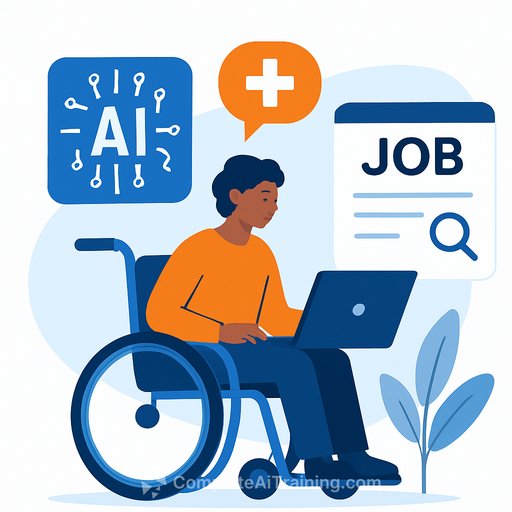
Kate Glazko, a third-year PhD student at UW's Allen Center of Computer Sciences and a person with a disability, identified a separate problem: AI resume sorters penalize candidates for disability-related scholarships and awards.
Her research found that resumes listing autism-related achievements were scored as "less leader-like" than identical resumes without those items. Glazko's team trained a generative AI model to remove this bias.
The approach showed promise, but adoption stalled. Glazko pivoted to help job seekers tailor their own resumes-allowing candidates to keep their identity while avoiding algorithmic filtering based on disability-related accomplishments.
She is also exploring personalized reminder systems built with generative AI, where users can create custom solutions for their own needs.
"That is the power of generative AI when it comes to accessibility," Glazko said. "It opens doors for people to build their own solutions and personalized solutions too."
Your membership also unlocks: