UW-Oshkosh nursing presents AI teaching tools to Universities of Wisconsin Board of Regents
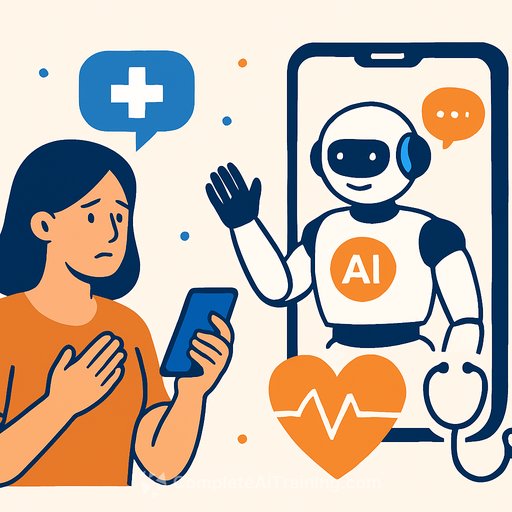
UW-Oshkosh joined 13 campuses in a Regents panel focused on practical uses of AI in teaching and learning. The standout: "synthetic patients"-AI-powered avatars used to expand clinical learning for nursing students.
Seon Yoon Chung, dean of the College of Nursing, Health Professions and STEM, outlined why the team pushed into AI. Traditional simulation is limited by space, staffing, time, and lab capacity. Online learners also need equitable access to meaningful practice.
From text prompts to lifelike avatars
Nursing began testing generative AI in Fall 2024 with text-based patient interactions through ChatGPT. Students practiced health histories and therapeutic communication in a low-risk, flexible format.
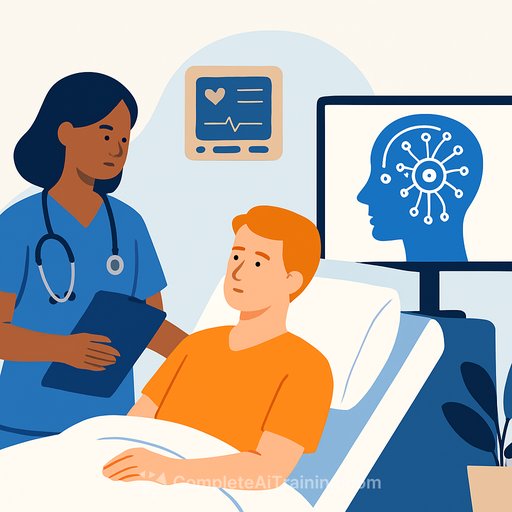
By late 2024, the team moved to voice-based conversations to better mirror real encounters. In early Spring 2025, they introduced visual, video-based synthetic patients that display facial expressions and nonverbal cues. After a summer pilot, students began using them in Fall 2025.
"These synthetic patients are built to present realistic clinical histories, diverse social determinants of health, and consistent responses," Chung said. "They also provide immediate formative feedback tied to communication and assessment competencies-an advantage that is difficult to achieve at scale through human-facilitated simulation."
Student perspective
Junior nursing student Megan Waller explained how working with synthetic patients improved her confidence and clinical judgment. Practicing cases repeatedly-without waiting for lab time-helped her prepare for high-stakes scenarios and refine communication with patients.
System-level support for AI
Universities of Wisconsin President Jay Rothman noted the system's role in setting responsible standards for AI across education, research, and the workforce. "This panel today demonstrated how the Universities of Wisconsin are embracing AI in strategic, collaborative, and responsible ways," he said.
Regent President Amy B. Bogost added, "AI presents tremendous opportunities and real challenges. By acting together, the Universities of Wisconsin are providing clear leadership for the state. Our universities are not merely responding to change, they're leading."
What this means for educators and healthcare leaders
- Scale practice time: Students can run more scenarios, more often, without queueing for labs.
- Strengthen equity: Online and on-campus learners get consistent access to high-quality simulation.
- Standardize feedback: Immediate, competency-based feedback supports faster skill growth.
- Broaden case diversity: Synthetic patients can reflect varied social determinants of health and clinical presentations.
- Optimize human-led simulation: Use faculty time where it matters most-coaching, debriefing, and assessment.
How UW-Oshkosh made it work
- Start simple: Text-based cases to practice history-taking and empathy.
- Add realism in stages: Voice interaction, then video avatars with expressions and nonverbal cues.
- Tie to competencies: Map prompts and feedback to communication and assessment outcomes.
- Pilot, measure, iterate: Summer pilots informed Fall deployment at scale.
- Keep ethics front and center: Set clear guardrails, data-use policies, and faculty oversight.
UW priorities for AI integration
- AI-related learning standards across the curriculum.
- Student-led research applying AI in healthcare, agriculture, and manufacturing.
- Improved teaching with AI tools.
- Industry partnerships to build real solutions.
- Ethical guardrails and policy clarity.
With more than 164,600 students statewide, the Universities of Wisconsin are positioned to prepare learners and employers for AI-enabled work.
Helpful resources
- NIST AI Risk Management Framework - a practical foundation for governance, risk, and controls.
- AACN Essentials - competencies that can anchor simulation design and feedback rubrics.
For teams building AI skills
If you're developing faculty or staff capabilities in AI for education or healthcare, explore curated paths by role at Complete AI Training: AI for Education and an AI Learning Path for Teaching Assistants.
Your membership also unlocks: