Verizon puts AI inside its network: what ops teams should know
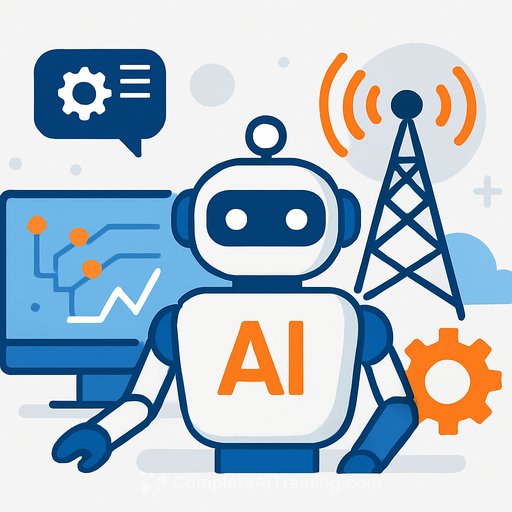
AI in telecom has spent years on the sidelines-demoed in labs, gated to pilots, and rarely touching live traffic. Verizon is now using AI inside its commercial network to cut energy use, improve performance, and support low-latency edge services for enterprises.
The driver is simple: rising costs, heavier loads, and AI-heavy applications that expect quick, reliable response. This is a shift from slideware to day-to-day operations.
Why this matters to operations
Networks are costly to run, with power bills climbing and traffic patterns getting harder to predict. Moving AI into production is about tighter control of opex, better use of existing gear, and faster responses when conditions change.
It's also about service quality. If AI helps hold SLAs during busy hours while trimming waste during quiet ones, the math works.
Where AI is going to work first
RAN energy optimization: Radio gear hums along even when demand dips. AI models can dial equipment behavior up or down based on real-time conditions, trimming power consumption without degrading coverage or experience. Small gains at thousands of sites turn into meaningful savings.
Performance management: Static rules miss patterns in mixed traffic-video, enterprise data, and AI inference flows. AI can spot drift early and trigger faster responses. The difference now: this runs against live traffic, which raises the bar on testing, guardrails, and rollback.
Edge services tuned for AI workloads
Many enterprise AI use cases need low latency and predictable throughput for on-site analysis and decision support. Verizon's edge footprint brings compute and connectivity closer to the user, while AI helps manage traffic, prioritize workloads, and protect service levels.
If the network can't respond quickly or anticipate demand, edge promises fall apart. Putting AI in the control loop is how operators keep latency, jitter, and stability within target bands. For context on edge architectures, see ETSI MEC.
Automation, cost pressure, and control
Margins are tight, and big capital bets are hard to justify without clear savings. AI reduces manual toil and increases consistency, but Verizon is keeping engineers in the loop: automation works inside defined limits, with boundaries and reviews.
Control and auditability are non-negotiable. Keeping AI inside Verizon's own infrastructure limits black-box risk and supports regulatory expectations. For governance frameworks, the NIST AI Risk Management Framework is a useful reference. Teams responsible for compliance and regulatory oversight should also consult the AI Learning Path for Regulatory Affairs Specialists to align monitoring and reporting practices.
What this signals for telecom ops
The industry conversation is shifting from "if" to "how." This won't flip overnight-legacy systems slow integration, and many use cases will stay narrow for a while. But AI spend is moving into core budgets, not experimental lines; leaders setting strategy and governance can use the AI Learning Path for CIOs to align IT policy, risk management, and production deployments.
The near-term playbook focuses on clear, repeatable problems with measurable payoff: energy, capacity, and incident response.
Practical takeaways for operations leaders
- Start where it pays: RAN energy management, anomaly detection, and fault triage.
- Use staged rollouts: shadow mode, canary cells/sites, time-of-day gating, and fast rollback.
- Set hard guardrails: max/min thresholds, kill switches, and human approval for high-impact changes.
- Instrument everything: detailed logs, model decisions, and before/after metrics for audits.
- Close the loop: weekly reviews of false positives/negatives, plus model retuning schedules.
- Define ownership: ops sets SLOs and limits; data teams manage features and drift; security reviews inputs/outputs.
Metrics to track
- Energy: kWh per site, kWh per GB, off-peak energy reduction, cost per site.
- Experience: latency p95/p99, jitter, packet loss, drop rate, throughput variance.
- Ops efficiency: auto-remediation success rate, false alert rate, ticket volume, MTTR.
- Model health: drift indicators, feature freshness, retrain cadence, rollback frequency.
- Edge outcomes: correct workload placement, backhaul utilization, SLA conformance at the edge.
Risks and how to blunt them
- Overfitting to seasonal patterns: test across events (holidays, storms, big games) before broad release.
- Safety margins squeezed: enforce minimum capacity/coverage floors per site and region.
- Vendor opacity: require explainability, test harnesses, and exportable logs before signing.
- Change fatigue: schedule windows, communicate impacts, and keep rollback simple and fast.
- Data quality: monitor sensor integrity, clock sync, and feature pipeline health like production code.
The bottom line
Verizon is taking AI out of the lab and putting it to work where costs and SLAs live. There will be tuning hiccups, but sitting out now carries its own risk as loads grow and expectations tighten.
If you run operations, the move is clear: pick high-ROI use cases, enforce guardrails, measure relentlessly, and iterate. If your team needs a structured path into automation skills, the AI Learning Path for Project Managers can help guide the upskilling plan.
Your membership also unlocks: