AI-Generated Code Works Until It Doesn't. That's When Your Client's Data Gets Exposed.
A founder with no engineering background describes a product in plain English. An AI model generates the code. Something functional appears on screen within hours. No senior developer. No architecture review. No staging environment. Just a prompt, a deploy button, and a working application serving real users.
This approach, sometimes called vibe coding, is genuinely impressive until a security vulnerability surfaces or a database query collapses under load. The problem is not that AI-generated code is inherently bad. The problem is that the gap between code that appears to work and code that is actually safe, scalable, and maintainable is invisible to anyone who cannot read what the AI wrote.
Right now, the people most enthusiastically shipping vibe-coded products are precisely the people least equipped to see that gap.
Where AI-Assisted Development Actually Works
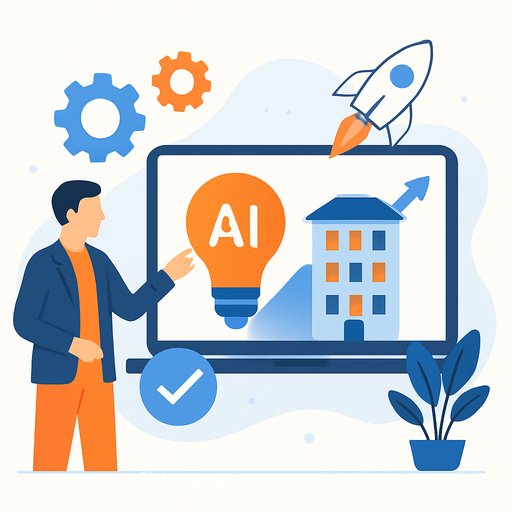
The productivity gains are real. Founders can validate product ideas in days instead of months. Small teams can build internal tools that would have required dedicated engineering resources two years ago. The democratization of software creation is not hype-it is happening.
What AI-assisted development does not solve is the layers of software that live below the surface of a working demo. Authentication logic that looks functional but contains exploitable vulnerabilities. Database queries that perform acceptably with ten users and collapse with ten thousand. API integrations that handle the happy path correctly and fail catastrophically on edge cases. Third-party dependencies with known security issues that an AI model had no reason to flag because nobody asked.
"AI won't replace good judgment," says Pablo Gerboles Parrilla, whose firm Alive DevOps builds and deploys software across multiple industries. "It'll amplify it. Founders who are clear on their vision and fast on execution will use AI as leverage, not a crutch."
The Accountability Problem
When a traditionally developed application exposes a security vulnerability, accountability is traceable. An engineer made an architectural decision. A code review missed something. A deployment process skipped a step. The chain of custody exists.
Vibe-coded applications introduce a different accountability structure. The person who deployed the application often cannot explain what the code does at a technical level because they did not write it and may not be able to read it. When something goes wrong-and in production software something eventually always does-the ability to diagnose the failure and prevent recurrence requires understanding the system at a level that prompt-based development does not necessarily produce.
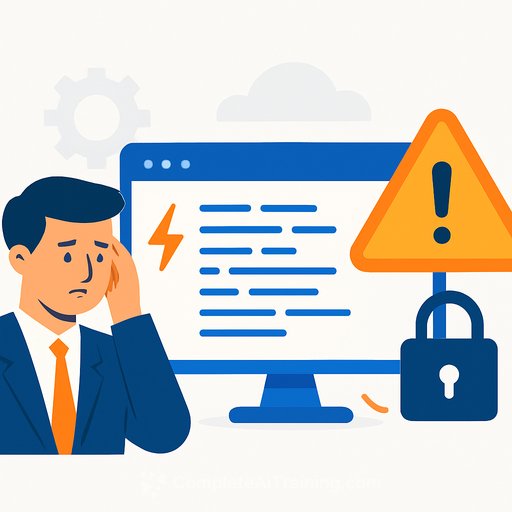
Authentication bypasses. Exposed environment variables. Unvalidated inputs. Insufficiently scoped database permissions. These are not exotic attack vectors. They are the first things a competent security review checks. They are also exactly the categories of vulnerability that AI code generation has been documented producing, not because the models are malicious, but because they optimize for functionality as described, not for the security properties the prompter did not think to specify.
A client whose data is exposed because a vendor shipped vibe-coded software with an unpatched authentication layer does not care that the development process was fast and affordable. They care that their data is gone.
Speed Without Architecture Is Faster Failure
Architecture is not a feature of code. It is a set of decisions about how components relate to each other, how the system handles failure states, how data flows between services, and how the application will behave as load and complexity accumulate over time. Those decisions do not emerge automatically from a prompt.
A vibe-coded application that skips architectural review is not moving fast. It is accumulating technical debt at velocity, and that debt comes due at the worst possible moment, usually when the business depends on the system most.
"Velocity doesn't mean rushing," Gerboles Parrilla explains. "It means removing friction. The fastest teams are the ones with the fewest blockers, the clearest goals, and the most autonomy. Security should be baked into the pipeline, not added at the end."
Where Technical Oversight Actually Matters
The answer is not to abandon AI-assisted development. The tooling is too useful and the productivity gains too significant. The answer is to be precise about where human technical judgment is non-negotiable.
Authentication and authorization logic should always be reviewed by someone who can verify that the implementation matches the intended security model.
Database schema design, particularly anything involving user data or personally identifiable information, warrants architectural review before it reaches production.
Dependency selection should include a check against known vulnerability databases.
Deployment configurations-environment variables, secrets management, network permissions-require a human eye regardless of how confidently the AI generated them.
None of this requires abandoning the speed advantages that AI-assisted development provides. It requires building a review layer into the workflow that is proportional to the risk surface of what is being shipped. An internal analytics dashboard built with AI-generated code and reviewed by a competent engineer carries a different risk profile than an AI-generated payment integration that was never audited.
How Serious Builders Are Using AI
The development teams producing the best outcomes with AI-assisted tooling are not using it to replace engineering judgment. They are using it to eliminate the repetitive work that does not require engineering judgment, freeing senior technical capacity for the decisions that do.
Boilerplate generation. Routine data transformation logic. Documentation. Test case scaffolding. Standard CRUD operations against well-defined schemas. These are the categories where AI generation earns its keep cleanly. The output is predictable, the failure modes are visible, and the review cost is low relative to the time saved.
The categories requiring the most caution are precisely the ones where failure modes are least visible to a non-technical operator: security-adjacent logic, state management in complex workflows, error handling at integration boundaries, and anything that touches external systems with real-world consequences. Those are the areas where rigorous human review is non-negotiable, not because AI cannot produce plausible code, but because plausible is not the same as correct.
The Client Relationship Depends on It
The businesses shipping AI-generated software to clients are implicitly making a warranty claim: that what they have built is fit for the purpose it was sold for. When that warranty breaks because of a security failure or data exposure, the consequence is not just a technical problem to be patched. It is a breach of the trust relationship that the entire client engagement was built on.
"Most software companies are just order-takers," Gerboles Parrilla says. "We go far beyond development. When we commit to a company, we become a strategic partner." Strategic partners do not ship code they cannot stand behind. They do not hand over systems they cannot explain. They do not treat client data as an acceptable risk surface for moving fast.
The vibe coding conversation in its current form focuses almost entirely on what AI-assisted development enables. That is the right conversation to have about a genuinely powerful set of tools. It needs to run in parallel with an equally honest conversation about what it does not provide automatically, and what any responsible development practice has to supply in its place. The clients whose data is on the line deserve that standard.
For product development teams looking to integrate AI tools responsibly, consider exploring AI Coding Courses and the AI Learning Path for Software Developers to ensure your team understands both the capabilities and the limitations of AI-assisted code generation.
Your membership also unlocks: