Vietnam's Education Ministry Shifts from Digitization to AI-Driven Restructuring
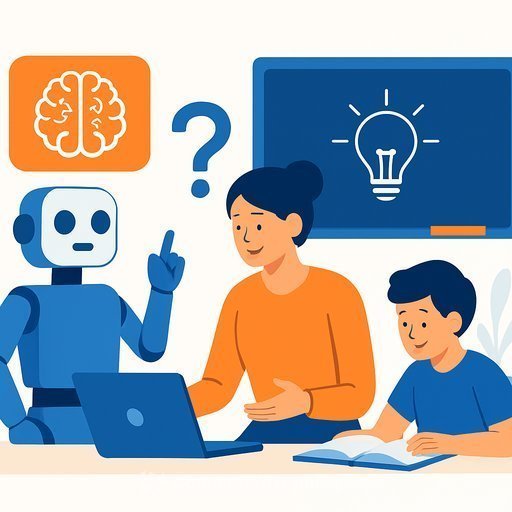
Vietnam's education system is moving beyond basic digital tools toward AI-powered governance and personalized learning, driven by the government's Resolution 71-NQ/TW on education breakthroughs.
The shift marks a departure from earlier efforts that simply moved existing processes online. The Ministry of Education and Training (MoET) now uses AI to restructure how schools operate and how teachers deliver instruction.
From Data Silos to Smart Governance
Unified governance platforms built on clean, shared data are replacing fragmented manual processes in schools. This enables faster, more precise decision-making in school management.
On the teaching side, AI tools help educators identify individual student abilities and recommend tailored learning paths. Teachers can flag students needing extra support more efficiently than before.
Nguyen Son Hai, Deputy Director General of the Department of Information and Communication Technology under MoET, said the ministry is preparing to enforce an Artificial Intelligence Law in education and developing a national strategy for AI deployment.
Balancing Innovation With Academic Integrity
The ministry is neither restricting AI use nor allowing it uncontrolled. Instead, it is creating a legal framework with regulations on safety, risk management, and academic integrity.
Schools and universities are being asked to lead on governance, establishing codes of conduct that foster innovation without compromising academic standards.
MoET has already embedded AI competency into school curricula. An AI education curriculum for general education students is under pilot and scheduled for rollout in the 2026-2027 academic year.
Three Priorities for Implementation
- Building digital and AI competencies among learners
- Creating shared digital platforms and data systems
- Upgrading infrastructure and access, especially in disadvantaged regions
Local authorities are rolling out support policies for internet and digital access to ensure no learner is left behind.
Universities Treat AI as a Strategic Driver
Hanoi University of Science and Technology (HUST) views AI as more than a subject to teach. It is overhauling curricula, teaching methods, research, and governance across the institution.
The Posts and Telecommunications Institute of Technology (PTIT) has launched DeepEduBench, a toolkit to evaluate AI models' teaching capabilities in Vietnamese. PTIT is planning a major Vietnamese educational dataset of up to 150 billion tokens with partners including Sotatek and DopikAI.
Experts said developing Vietnamese-language AI models and rigorous evaluation standards will be critical to scaling practical applications and strengthening technological self-reliance.
Research Tied to Real-World Problems
At the University of Economics and Business Administration under Thai Nguyen University, research has shifted away from publication-focused work toward studies addressing concrete challenges facing local communities and businesses.
Projects must now define beneficiaries, application contexts, and pathways to become actionable solutions. Students join research as early as their second year, backed by funding and startup initiatives.
The university is advancing plans for applied research centers and collaborative laboratories to bridge academic work with practical business environments.
For educators implementing AI in your institution, explore AI Learning Path for Teachers or browse more resources on AI for Education.
Your membership also unlocks: