India's Big AI Leap in Content: Vijay Subramaniam's Playbook for Creatives
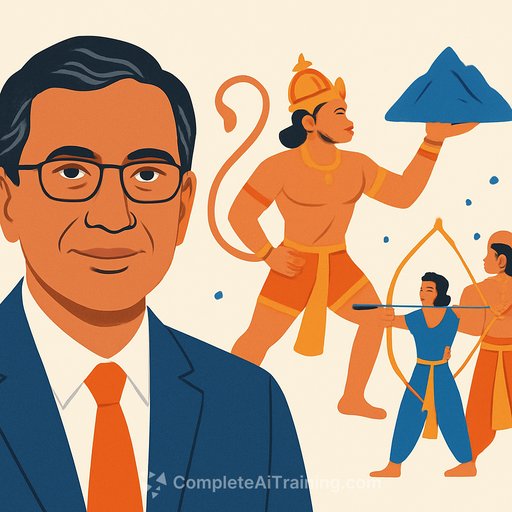
Vijay Subramaniam, founder and group CEO of Collective Artists Network, has shifted one of India's top talent ecosystems into an AI-first studio. The slate says it all: Mahabharat: Ek Dharmayudh (streaming on JioHotstar), the upcoming theatrical film Chiranjeevi Hanuman: The Eternal, a push into virtual influencers, and a "spiritual rock band" named Trilok. The through-line isn't hype-it's a clear bet on scale, speed, and new creative roles.
The message to creatives: AI is a toolchain, not a replacement. Story remains the product. Distribution rewards those who build faster without dropping quality.
From Talent Company to AI Studio
Collective Artists Network has reoriented around an AI production stack and a data-led creative operation. A key move was the earlier acquisition of Galleri5, the group's AI mar-tech arm that now fuels trend forecasting and content decisions. The goal is blunt: reduce cost, increase volume, and improve visual scale without sacrificing intent or craft.
India runs on ~9,000-10,000 screens-far fewer than China or the US-so content-to-commerce math matters. Subramaniam's stance is simple: serve the consumer first, then let the trade catch up.
2025: Big Swings, Real Outputs
A personal loss became an inflection point. The team delivered India's first AI show, Mahabharat: Ek Dharmayudh, announced a 4K AI-enabled theatrical with Chiranjeevi Hanuman: The Eternal, and took Terribly Tiny Tales' Greater Kalesh to the top of Netflix India. They also greenlit new shows and launched Trilok. That set the tone for Collective Artists Network 2.0.
Industry Resistance vs. Audience Reality
New tech always rattles an incumbent system: cars vs. chariots, streaming vs. theatres, e-commerce vs. retail. Subramaniam argues the consumer has already decided-people want great stories, delivered faster, with higher visual payoffs. The work still lives or dies on engagement, not on the novelty of the tool.
Humans at the Core (and New Jobs Created)
Mahabharat: Ek Dharmayudh didn't "skip" humans; it reorganized them. The studio staffed 30 engineers, built a new editing bench, and ran a writers' room of eight-nine people shipping scripts weekly. A 23-year-old first-time director, Lavanya, got a stage that would typically take decades to reach. Music, creative, and post were staffed with fresh talent.
Think animation-era workflows with modern AI: pipeline building, 3D modeling, VFX compositing, tool orchestration, and QA at every step. This isn't typing a line into a chatbot and calling it a day. It's closer to how studios like Pixar systemize creativity-teams, process, iteration.
Chiranjeevi Hanuman: The Eternal - What to Expect
This is positioned as a 4K AI-enabled, human-created theatrical film. The story centers Hanuman-not as a side character in Ramayan, but as the lead-tracking his superhuman feats, his vulnerability, and his becoming. It follows the holy scriptures and is directed by National Award winner Rajesh Mapuskar.
Inside the 'Historyverse'
The studio is building an ecosystem for mythological and historical storytelling under the "Historyverse" banner. The plan isn't to guess the future but to be ready when a new capability unlocks. The tech stack is in place; now it's about shipping the right ideas, fast.
Data as a Creative Advantage
Galleri5's social intelligence tooling is being used to forecast trends-both consumer behavior and content signals. For creatives, that means faster feedback loops and clearer bets: what to make, when to release, and which styles resonate right now.
What This Means for Creatives
- Story first, tools second: AI can scale visuals and speed, but the hook still comes from human insight.
- Think in pipelines: Treat your show or film like a product-previs, asset libraries, versioning, QA, and handoffs between art, engineering, and post.
- New roles are here: AI editors, modelers, R&D artists, toolchain producers, data-informed writers. Build a portfolio that shows you can lead or plug into these flows.
- Use AI where it compounds: concept frames, style tests, animatics, shot clean-up, Design, and iteration sprints-then layer human polish.
- Credit and consent: Track sources, respect rights, and be transparent with teams and clients about process and attribution.
Practical Next Steps
- Ship an AI-assisted short: lock a one-page script, design a minimal shot list, and build a repeatable pipeline you can reuse.
- Pair with an engineer: creative + engineering beats either alone. Co-own a rapid test cycle.
- Instrument your work: collect data on watch time, shares, and drop-off; iterate like a product team.
- Build your asset library: characters, environments, textures, and templates cut future timelines in half.
Tools and Learning
If you're mapping your upskilling path, these resources can help you decide what to learn next and which tools to trial.
- AI courses by job role - pick skills that plug into modern content pipelines.
- Generative Video - explore options for previs, motion, and post.
The Takeaway
AI won't replace creative taste-it spotlights it. Subramaniam's bet is clear: scale the parts that should scale, and protect the parts that make us care. India's AI-led content surge is underway. The ones who win will be the ones who learn the tools, keep the soul, and ship.
Your membership also unlocks: