
AI news ·
Viral post tricks 7 million people into critiquing a real Monet as AI-generated art
A real Monet painting went viral as supposed AI art, drawing 7 million views and thousands of comments pointing out "flaws" that didn't exist. The incident shows how a false label shapes what people think they see.
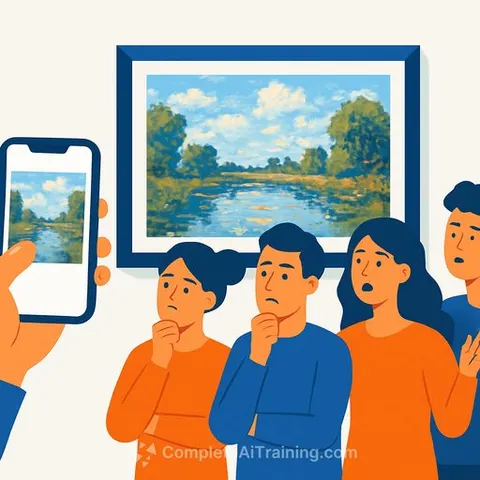
A Real Monet Painting Fooled Millions Into Calling It AI Art
A painting that went viral last week as supposed AI-generated art was actually created by Claude Monet in the 19th century. The post accumulated 7 million views and thousands of comments dissecting what made it look artificial-none of which applied to the genuine work.
An X user shared an image of water lilies in Monet's style on May 12, claiming they had generated it with AI. They asked followers to identify flaws that would separate it from authentic Monet work.
The responses came fast. Commenters pointed to "no cohesion to the depth and color choices," "no canvas weave," and "lack of the mess of humanity." Others said the composition wasn't coherent. All of these critiques, it turned out, described an actual Monet painting.
How the Premise Shaped What People Saw
The incident reveals how strongly a label influences perception. Viewers who saw the "made with AI" framing analyzed the image through that lens first, before actually examining the painting itself. Once that premise took hold, they found evidence to support it-even when none existed.
One Reddit commenter captured the dynamic: "They're literally behaving like an AI. Given the premise that the painting is AI-generated, and without verifying that premise, they perform an analysis in such a way that they will always find something, even if it's not there."
What This Means for Creatives
The episode exposes a real tension for visual artists. AI image generators have advanced enough that thousands of people believed the Monet was plausible as machine-generated art. That credibility gap-where AI output looks similar enough to master work to fool millions-matters for how creatives position their own work.
The problem isn't just that AI-generated images exist. It's that blanket skepticism now attaches to anything that looks polished or stylistically coherent. A genuine painting gets accused of being synthetic simply because the accusation sounds reasonable.
This dynamic has a parallel in accusations of AI-generated writing. As more AI content floods digital spaces, legitimate work faces suspicion by default. The solution isn't to make AI detection easier-it's to stop assuming guilt before verification.
For creatives, the takeaway is practical: document your process, establish clear attribution, and understand that your audience's trust in authenticity has shifted. The burden of proof has moved.
Learn more about Generative Art and how AI systems approach visual creation, or explore AI Design Courses to understand these tools from a creator's perspective.