Virginia Tech and Procon Build Robot Team for Construction Site Monitoring
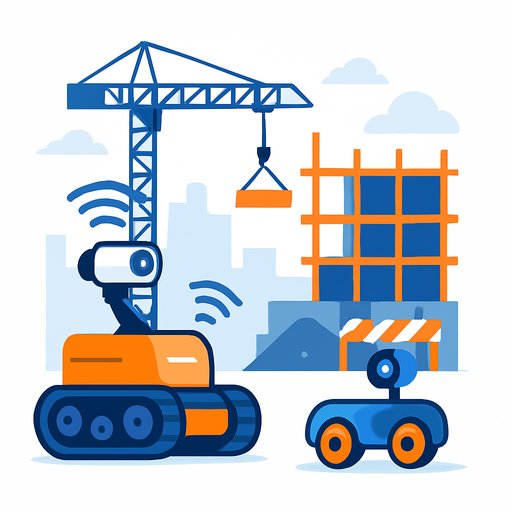
Three-quarters of U.S. construction projects face delays each year, according to the Associated General Contractors of America. Virginia Tech researchers and Procon Consulting are testing a potential solution: a coordinated team of humanoid robots, quadrupeds, and drones that monitor construction sites in real time.
The system, called MARIO (Multi-Agent Robotic System for Inspection On Site), uses artificial intelligence sensing and computer vision to capture continuous data from job sites. The technology could address labor shortages, reduce safety risks, and expand access to construction careers through digital twins-digital models of real-world structures.
How MARIO Works on Site
Robots and drones deployed across a project capture visual and sensor data from ground and aerial perspectives. Instead of occasional site visits, project teams receive structured data that identifies coordination issues, installation defects, and sequencing problems early, before they become expensive rework.
Steve DeVito, director of technology at Procon Consulting, compared the system to existing mapping tools: "MARIO would essentially act as the Google Satellite and Street View capture systems for buildings and infrastructure, ensuring that digital models are based on the most current, measured representation of reality."
Safety and Labor Efficiency
Robots can enter hazardous areas where human inspectors face risk. They navigate unstable upper floors, partially shored excavations, and other dangerous conditions while collecting high-quality data-reducing exposure to falls, collapses, and struck-by incidents.
A single inspector can supervise multiple robots across multiple sites from one location, scaling expertise without requiring travel between projects. Kereshmeh Afsari, associate professor of construction engineering and management at Virginia Tech, said the system addresses a core industry problem: "Construction projects are expanding geographically while the industry faces a shortage of skilled labor."
Expanding the Talent Pool
Remote inspection workflows remove physical demands from certain construction roles. People with disabilities, caregivers, and those living far from major construction sites could contribute to inspection and construction work using robots as their presence on site.
The project has provided hands-on experience for six students-four graduate and two undergraduate-working at the intersection of computer science, robotics, AI, and construction.
For more on how AI applies to your industry, see AI for Real Estate & Construction and AI Agents & Automation.
Your membership also unlocks: