Study tests whether AI can close the leadership communication gap
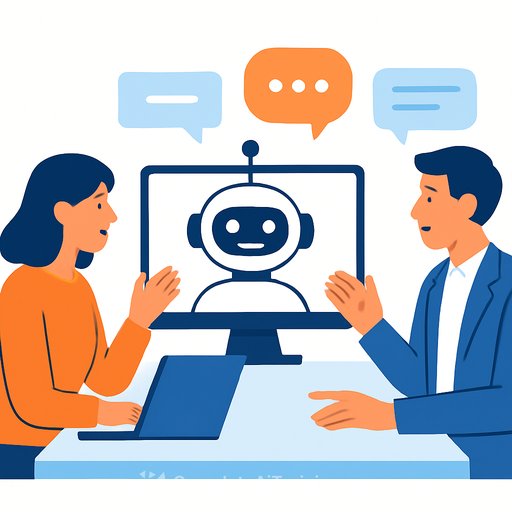
Researchers at Virginia Tech are investigating whether artificial intelligence can help workers and managers practice difficult conversations and build communication confidence. The study centers on CommCoach, a tool that simulates workplace scenarios so users can rehearse tough interactions and receive real-time feedback.
The research addresses a persistent problem. According to a 2020 study, 86 percent of employees blamed ineffective communication for workplace failures. Seventy percent avoid difficult conversations altogether. Research cited by Harvard Business Review found that two-thirds of managers feel uncomfortable communicating with employees.
How CommCoach works
Users describe a challenging workplace situation to the system-a performance review, conflict with a colleague, or a difficult feedback conversation. CommCoach then builds a scenario that mirrors it, with a simulated partner whose responses adjust based on the user's communication choices.
The tool focuses on specific skills:
- Being clear and direct while remaining attentive to the other person's perspective
- Reflecting and paraphrasing to check understanding rather than rushing to solve problems
- Noticing emotional cues and responding with curiosity instead of avoidance or escalation
- Recognizing communication patterns across multiple conversations
The system adapts feedback to what individual users struggle with, whether that's listening or emotional awareness. As participants practice conversations, researchers measure whether they report improved communication skills and leadership confidence.
Beyond building a tool
Assistant Professor Eugenia Rho and doctoral student Lance Wilhelm, a U.S. Air Force major, aren't simply creating software. They're studying whether AI-mediated conversation practice actually works, where it helps, and where it might cause problems-before such tools reach the market.
"My worry is that these AI technologies are being used with a limited understanding of their upsides and downsides," Wilhelm said. "Are there blind spots that we're missing?"
Rho flagged a longer-term risk. "If AI consistently handles the difficult parts of communication for people, we risk improving short-term outcomes while weakening long-term skill development," she said.
Wilhelm's motivation comes from personal experience. As a new lab manager, he struggled with confidence when communicating with employees who had far more technical experience. That gap inspired him to test whether AI could fill gaps in workplace training.
The researchers are recruiting study participants to test CommCoach and provide data on its strengths and weaknesses. The work is part of Wilhelm's Ph.D. thesis in computer science through Virginia Tech's Air Force-sponsored academic program.
For PR and communications professionals, the research offers insights into how AI might support team communication training. Learn more about AI for PR & Communications and AI for Management.
Your membership also unlocks: