Virtana unveils a system-aware MCP Server that turns fragmented monitoring into end-to-end AI operations
Virtana announced a new version of its Model Context Protocol (MCP) Server, built to give AI agents and LLMs full-stack visibility and the ability to act across enterprise systems. Instead of reading isolated signals, machines can now work from a live model of how apps, services, infrastructure, and AI workloads fit together-then make decisions at scale.
The release opens Virtana's platform to a broad ecosystem of AI agents and LLMs, including ChatGPT, Claude, Gemini, and Microsoft Copilot. It moves observability from human-only dashboards to machine-ready context, closing the loop between insight and action.
What's actually new
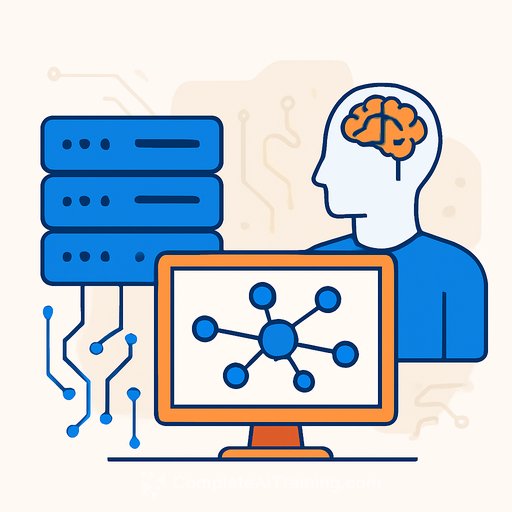
Virtana's platform uses a patented full-stack optimization architecture to power a system dependency graph-a dynamic map of relationships across your enterprise. The MCP Server exposes that graph through a standard interface so AI agents can query, reason, and orchestrate workflows using the same source of truth your teams rely on.
If you're standardizing on the Model Context Protocol, this release plugs your agents directly into structured operational context instead of brittle, one-off integrations.
Why operations teams should care
Monitoring has been split across tools-infra, network, APM, cloud telemetry-making triage slow and noisy. AI-driven operations need more than dashboards; they need a dependency-aware model that connects cause to effect across the stack. Virtana normalizes telemetry into one graph and serves it through the MCP Server so agents can analyze, prioritize, and act based on real system relationships.
What AI agents can do with Virtana's MCP Server
- Query full-stack context in natural language: Ask, "Which services are affected by storage latency in region X?" and get structured results that traverse infra, orchestration, and application layers-no pre-built queries required.
- Autonomous root cause and dependency reasoning: Use live topology plus signals and history to find likely root cause and rank actions by downstream impact, not just symptom noise.
- Analyze the whole system: Correlate across network, infrastructure, and applications in hybrid and multi-cloud environments to close gaps left by siloed tools.
- Recommend smarter actions: Leverage Virtana's optimization architecture to propose changes grounded in actual dependencies, not point metrics.
- Drive automation: Connect orchestration platforms like Ansible and Terraform to execute workflows sourced from AI-generated decisions.
Practical wins for Ops
- Faster incident response: Cut MTTD/MTTR by moving from alert storms to dependency-aware triage with clear blast radius and likely root cause.
- Change impact you can trust: Model how proposed changes ripple across services before rollout; automate approvals for low-risk paths.
- Capacity and cost control: Tie performance to spend at the service level; recommend rightsizing and placement across on-prem, cloud, and edge.
- SLO protection: Prioritize actions by user impact, not just resource strain; keep error budgets intact.
- AI/GPUs without guesswork: Track GPU, CPU, storage, and network as one system so AI workloads land where they deliver the best outcome.
How it fits into your ecosystem
The MCP Server opens Virtana's unified graph to agents built on ChatGPT, Claude, Gemini, and Copilot. Automation platforms (Ansible, Terraform, and others) can plug in to execute approved runbooks-closing the loop from detection to decision to action.
Natural language becomes an expression of intent; the server translates that intent into structured graph interactions so agents pull grounded data, analyze relationships, and act with context.
Getting started
- Pick a noisy, high-value service and map it into Virtana's dependency graph.
- Wire an agent through MCP to handle triage questions and change-impact checks.
- Attach automation for a few low-risk, high-volume tasks (e.g., safe retries, targeted rollbacks).
- Measure outcomes (MTTD/MTTR, toil reduction, SLO stability) and expand to adjacent services.
About Virtana for AI-driven operations
Virtana provides an observability platform for hybrid and multi-cloud with full-stack AI visibility across applications, services, data pipelines, GPUs, CPUs, networks, and storage. Powered by high-fidelity data and agentic AI, it correlates health, performance, cost, and user impact in real time with advanced event intelligence and autonomous insight generation.
Trusted by Global 2000 enterprises and public sector organizations, Virtana helps IT Operations and DevOps teams reduce risk, strengthen resilience, improve efficiency, and modernize with confidence across multi-cloud, on-premises, and edge environments. For protocol-specific resources, see MCP.
Your membership also unlocks: