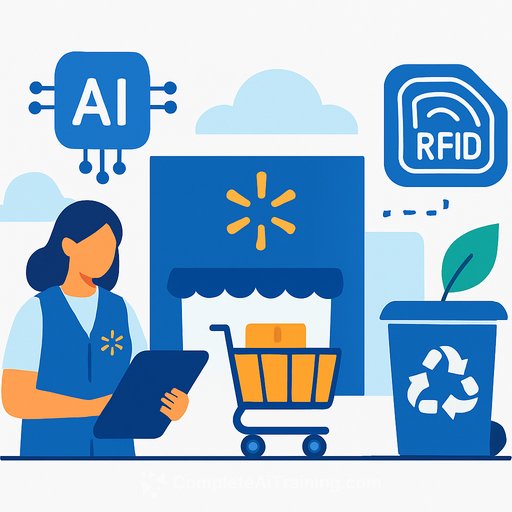
Walmart Uses AI and RFID to Cut Waste in Fulfillment and Fresh Food
Walmart is deploying three separate technologies across its operations to reduce packaging and food waste: an AI system that optimizes void fill in e-commerce shipments, RFID labels in fresh food departments, and recycled-content packaging materials supplied by vendors.
In fulfillment centers, Walmart installed an AI-enabled system that measures empty space inside shipping cases and dispenses the exact amount of paper void fill needed. The approach cuts material consumption while streamlining the packing process.
The retailer is testing RFID-enabled labels in fresh food departments to improve inventory visibility. Better tracking helps reduce spoilage and waste before products reach customers.
Walmart also worked with a supplier to introduce a flexible film bag made with 30% post-consumer recycled resin for potato packaging. The collaboration demonstrates how suppliers can integrate recycled materials into existing product lines.
Part of a Larger Sustainability Push
These initiatives support Project Gigaton, a program Walmart launched in 2017 to work with suppliers on reducing or avoiding 1 billion metric tons of greenhouse gas emissions across global product value chains by 2030. Packaging and waste reduction are core focus areas.
For operations professionals, the three approaches show how AI Agents & Automation and digital tracking can address specific efficiency problems. Rather than broad sustainability mandates, Walmart applied targeted solutions: automation where material use is high, tracking where visibility gaps exist, and supplier partnerships where material substitution is feasible.
The company has spent decades using its scale to push suppliers toward waste reduction and packaging redesign. These recent deployments show how that pressure translates into concrete operational changes across different parts of the business.
Your membership also unlocks: