
AI news ·
Walmart, Uber and Microsoft move to limit AI tool usage as costs rise
Major companies including Walmart, Uber, and Microsoft have imposed spending limits on internal AI tools after costs outpaced budgets. The experimental phase is over - firms now demand measurable returns before scaling access.
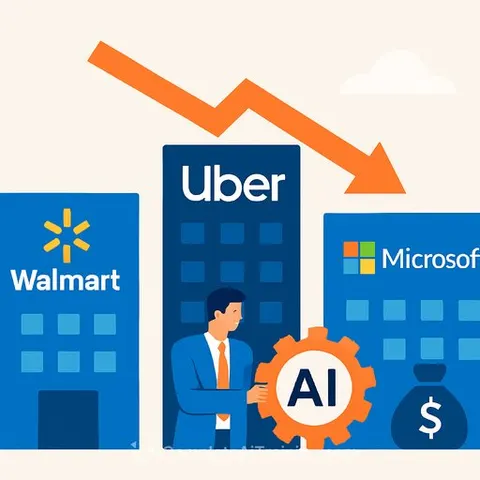
Enterprise AI Spending Enters Cost-Control Phase
Major companies are shifting from pushing AI adoption to measuring its actual returns. Walmart, Uber, and Microsoft have all implemented usage restrictions and cost controls on their internal AI tools in recent months, signaling that the experimental phase of enterprise AI is ending.
Walmart introduced usage limits for Code Puppy, its internal coding assistant, after employee adoption drove costs higher than expected. The company now uses a token-based system to manage spending and direct employees toward the highest-value applications. Employees retain access to other AI platforms like Claude and ChatGPT.
Uber deployed Claude Code to roughly 5,000 engineers earlier this year but exhausted its annual AI budget within months. Microsoft asked thousands of engineers to switch from Claude Code to an internally built alternative by the end of June, a move tied to controlling rising costs. GitHub introduced token-based pricing for Copilot, directly linking expenses to actual usage.
From Access to Accountability
These moves reflect a broader industry pattern. Companies no longer debate whether to adopt AI - they now focus on which use cases deliver measurable results and how to scale investments sustainably.
Early adoption emphasized speed and experimentation. The next phase centers on governance, cost optimization, and documented return on investment. Unlimited access is giving way to deliberate deployment based on business outcomes.
For product development teams, this means AI tools are no longer free resources. Teams must justify usage and demonstrate value to keep access. The organizations that gain the most advantage will be those using AI most effectively, not those using it most.
If your team works with AI coding tools or generative code platforms, understanding cost structures and ROI measurement will become essential skills.